How Translation Improves Patient Care in Multilingual Communities - Portada
02/12/2025

How Translation Improves Patient Care in Multilingual Communities

Multilingual communities have always been part of the healthcare landscape in the U.S., but an increase in global migration, cultural diversity, and intergenerational households means that medical providers are interacting with growing numbers of patients who speak languages other than English. 

According to the U.S. Census Bureau, about 21.7% of people speak a language besides English at home. Spanish leads the list, followed by Chinese and Tagalog. At the same time, data from UnitedHealth Group shows that 36% to 59% of the U.S. population resides in counties with the lowest health literacy levels. Therefore, in places where multilingualism is common, translation services are foundational to equitable healthcare, and there is still much work to be done to ensure these communities have the medical language access they both require and deserve. 

The High Stakes of Language Barriers 

Health literacy already presents a challenge for many patients in the U.S., with nearly 25% of adults reading at or below a 5th-grade level, while most medical documents require 10th-grade comprehension or higher. That gap grows even wider for patients in the U.S. who hail from multilingual communities, where language and cultural differences can compound existing barriers to understanding. 

When critical information is not translated or adapted for these patients, they are left to interpret complex instructions alone. The ramifications of this negligence can be catastrophic. In one widely reported case, a Vietnamese family in the U.S. lost their 9-year-old daughter after she experienced an adverse reaction to a medication she’d been prescribed. Her family had not been issued adequate instructions about at-home care or what to watch for in the event of a bad reaction, and a lack of proper medical interpretation meant the child’s caregivers could not effectively communicate what was happening. The girl’s subsequent death is a tragic example of the essential importance of language access to patient safety. 

Why Professional Translation Makes All the Difference 

Professional translation services can bridge such communication gaps by ensuring that healthcare information is accessible, accurate, and culturally relevant. For instance, a well-translated discharge summary ensures a patient understands what medications to take, when to schedule follow-ups, and how to monitor for complications.  

Specialized medical translators reduce the risk of ambiguity and error by clarifying terminology for patients and caregivers, and their cultural competence also allows them to localize content, meaning that patients understand medical content in a way that is adaptive to their culture’s health beliefs and norms. The difference between a quick translation and a culturally tailored one can determine whether a patient feels seen, or sidelined. 

When Patients Understand, Everyone Benefits 

When language barriers are removed in a medical situation, the benefits go both ways. Providers, too, gain more clarity on their patient’s situation, they gain more trust from patients and their families, they are able to be more efficient in their treatment, and they’re likelier to achieve better outcomes. Patients who fully understand their care are better equipped to follow treatment plans correctly, which reduces the chance of otherwise-avoidable complications, repeat visits, or emergency interventions. 

For healthcare teams, a better understanding also leads to smoother coordination with families, and lower liability risk. Clear communication also supports stronger patient relationships, which is key to today’s value-based care models in which satisfaction and outcomes matter more than ever. 

Finally, from a healthcare provider perspective, professional translation ensures compliance with legal and accreditation standards, which helps organizations meet both ethical and regulatory benchmarks. 

Conclusion 

Language should never be a barrier to safe, quality healthcare. Professional translation, therefore, reduces health risks, builds trust between provider and patient, and ensures that every patient, regardless of the language they speak, can access the information they need to make informed decisions about their health. 

When patients understand their care, outcomes improve. And when healthcare providers invest in language access, the entire system becomes safer, more inclusive, and more effective. 

Culturalization in Pediatric Care Adapting Healthcare Communication for Diverse Needs - Portada
18/11/2025

Culturalization in Pediatric Care: Adapting Healthcare Communication for Diverse Needs

Pediatric patients are often considered an especially vulnerable population because of their developing systems, limited autonomy, and reliance on adults for care. When these patients, or their caregivers, face cultural barriers stemming from their language, religion, cultural norms or trust in medical systems, this vulnerability is heightened. To care for these doubly vulnerable children, who account for a significant portion of US pediatric patients, providers need to not only develop cultural competency but also adapt their healthcare materials to align with the language needs and backgrounds of diverse families.  

Attention to both language and culture when designing healthcare resources plays a role in reducing patient and family anxiety and increasing trust in the provider; it can also improve children’s pediatric care experiences and outcomes. 

Culturalization in Pediatric Healthcare 

Culturalization is a deeper and more comprehensive approach to translation used with medical content to ensure it is not only linguistically accurate but also aligned with the values, beliefs, and expectations of the target audience. Adapting tone, terminology, and cultural references is essential to making information more relatable and engaging.  

A brochure on childhood immunizations might, for example, be translated into Spanish using the formal mode of address and accessible terminology; be adapted to include photos of Hispanic children and families; and include a section addressing vaccine hesitancy and providing questions families can use to start a conversation with their provider.  

The degree to which healthcare materials take patient identities into account influences the way children and parents interact with them, so great attention should be given to tailoring them, especially when they provide key information like treatment options, patient instructions, and health education on a specific topic. 

How Sensitive Translation Improves Patient Engagement 

Sensitive translation is at the root of culturalization and is essential in fostering patient engagement. Tailoring language and content to local values while maintaining accuracy is of the utmost importance because failure to do so can alienate patients or lead to misunderstandings. Below are some examples of healthcare materials that need to be culturally adapted for diverse audiences to increase understanding and compliance: 

  • eConsent forms: Adapt legal tone, reading level, and decision-making language. Consider how family roles and perceptions of medical authority vary across cultures (e.g., collectivist vs. individualist decision-making). 
  • Appointment reminders: Adjust phrasing for formality/informality, preferred time formats (12h vs. 24h), date formats, and cultural holidays or taboos around certain days/times. 

The Role of Culturalization in Reducing Anxiety and Building Trust 

Recognizing that children’s experiences when they receive medical care can significantly impact their overall well-being, healthcare providers have sought to create more positive and empowering encounters through the CARE model, which stands for Choices, Agenda, Resilience and Emotional support. Culturalization contributes to emotionally safe pediatric care by making this model accessible to all patients. Below is a description of each element of the CARE model and how culturalization supports it. 

  • CHOICE: Giving patients a sense of control and agency, even in small ways, can significantly reduce their feelings of powerlessness. Providers might, for example, let the child choose which arm they want a shot in or which comfort measures they want to use. Another way they can support choice is by providing culturally adapted consent forms, instructional materials and educational resources to help families make informed decisions in their preferred language. 
  • AGENDA: Clearly laying out the care plan, including what to expect and what is expected of the patient and family, can alleviate anxiety and promote understanding. Care plans translated using culturally resonant language can help families understand and follow treatment steps confidently. 
  • RESILIENCE: Focusing on a child’s strengths and reframing negative experiences can help build resilience and foster a more positive outlook. Adapting the tone and content of encouraging messages to a specific cultural context can encourage emotional strength in children facing medical stress. 

In short, working in tandem with the CARE model, culturalization fosters trust and reduces anxiety by aligning communication with cultural expectations. 

Conclusion 

Cultural competency in pediatric care is essential to serving children well. While many things contribute to a culturally competent experience, language access and thoughtful translation are integral to ensuring equity and engagement. By integrating language and cultural adaptation into their practice, health care providers can enhance patient experiences, improve outcomes, and build trust with diverse communities.

Inclusive Language in Queer Healthcare  Why It Matters More Than Ever - Portada
08/10/2025

Inclusive Language in Queer Healthcare: Why It Matters More Than Ever

Imagine you’re in a doctor’s office. You’re in pain, feeling vulnerable, and trying to explain something personal about your body. Then, the healthcare professional caring for you uses words that convey a lack of understanding. Maybe they make assumptions about you, ask questions that seem intrusive and irrelevant, or speak in a dismissive way that makes you feel invisible. In intimate settings like this one, language isn’t just a vehicle for gathering facts, it’s central to forging connection and trust.  

The language healthcare workers use shapes how safe patients feel and how comfortable they are disclosing important health-related information. But for many LGBTQ+ individuals, providers’ persistent use of outdated and non-inclusive language makes healthcare settings unwelcoming and worsens health outcomes. And while there are many factors that affect the quality of care patients receive, including legal restrictions and differences in health beliefs, the kind of environment a provider’s language creates is a huge determinant.  

Photo of Adriel Maroni.

Our People & Culture Specialist, Adriel Maroni, attests to the impact this conscientious use of language can have: “As someone who’s both part of the LGBTQ+ community and works in language services, I’ve seen firsthand how much of a difference the right words can make. Because it’s about showing you care about creating inclusive, respectful, and caring environments for the community.” 

Medical professionals already have a strong understanding of the important role language access plays in properly caring for the over 67 million people in the U.S. who speak a language other than English at home; extending that understanding addressing the needs of queer patients, who make up 7.6% of the U.S. population, is the next step in promoting health equity. Providers can remove subtle language barriers by using simple, neutral, and inclusive language. If you’re wondering what that looks like in practice, read on! 

From Theory to Practice 

Healthcare teams, and the language professionals who support them, can employ inclusive language strategies to better meet the needs of LGBTQ+ patients. But these strategies are most effective when grounded in cultural competency: the ability to recognize, respect, and adapt to others’ lived experiences. A culturally competent team approaches interactions with humility and a genuine willingness to learn, acknowledging the impact of past discrimination, avoiding assumptions, and listening closely when patients share their identity and needs. When teams start with cultural competency, inclusive language strategies build on and reinforce the consideration they are already showing.  

Using Gender-Neutral Language 

One strategy health professionals can employ to create space for queer patients is to speak in gender-neutral terms. In English, some gendered terminology is used when referring to people and animals, and many languages, such as Spanish and French, have a grammatical gender system in which all nouns are classified as either masculine or feminine. To avoid making assumptions about gender, providers can opt for gender-neutral words such as “partner” instead of “husband/wife/boyfriend/girlfriend” and “parent” instead of “mother/father.”  

Providers can also skip unnecessary gendered words, as in “The patient should continue taking [his or her] medications as prescribed” or use plurals to keep language neutral, as in “People with asthma should carry their inhalers with them at all times.” They can also rephrase thoughts using “the patient” instead of “he/she,” as in “The patient is in the waiting room” instead of “He is here for his appointment.”  

Together, these techniques can lower the anxiety many LGBTQ+ patients feel when seeking care and encourage them to share their concerns more openly. 

Respecting Names and Pronouns

Another way healthcare providers can show care for their queer patients is to respect their chosen names and pronouns, especially in the patient registration and admission process. Ensuring that all paperwork offers patients the opportunity to identify themselves as they see fit by, for example, including a write-in gender field, not just “male” or “female”, demonstrates a commitment to inclusivity. If a provider misuses a pronoun, they can make a brief, sincere apology and move on. This helps build trust and shows a willingness to improve. And, when names or gender markers don’t match official documents, providers can respectfully ask “Could the insurance be listed under a different name?” instead of asking for the patient’s “real” name, which can feel invalidating. 

Providing Education 

Inclusive language isn’t mastered overnight; using it effectively and consistently takes ongoing education and openness to growth. But improving health equity starts with improving education around language. Healthcare professionals, translators, and interpreters should all receive regular training to understand best practices that will allow them to provide inclusive, culturally responsive care.  

Providers may at first feel inadequately prepared or lack confidence in their ability to use inclusive language. The good news is, patients don’t expect perfection; attentiveness and genuine effort go a long way. Adriel told us: “The most inclusive providers I’ve worked with aren’t the ones who know everything. They’re the ones who are willing to listen and learn.”  

Caregivers can begin by using some of the strategies we have mentioned and giving themselves grace. And translators can do their part by paying close attention to the author’s intent. If the source text uses gender-neutral language, it’s likely a deliberate effort to be inclusive, so the final translation should preserve that tone by using equivalent gender-neutral language in the target text whenever possible. 

Why It’s Worth the Effort 

Inclusive language is about showing patients they belong. For LGBTQ+ individuals, thoughtful communication can be the difference between feeling dismissed and feeling safe. When healthcare teams and language professionals take the time to ask the right questions and listen with respect, we move closer to a system where every patient, regardless of language, identity, or background, receives informed, compassionate care. 

Healing Through Gaming The Role of Video Games in Therapy - Portada
12/08/2025

Healing Through Gaming: The Role of Video Games in Therapy

The idea that video games could support physical and cognitive healing might have sounded farfetched a few years ago. But today, it’s a growing field backed by research, innovation, and real-world results. Interactive games are increasingly being used in clinical and therapeutic settings to aid rehabilitation, improve motor function, and boost cognitive resilience. And when these tools are created with linguistic and cultural accessibility in mind, they can foster greater inclusion, engagement, and recovery for diverse patient populations. 

Gaming for Cognitive and Physical Rehabilitation 

Video games are becoming powerful tools in rehabilitation for helping patients regain cognitive and physical function in ways that feel more engaging and less clinical. Part of that success is thanks to their interactive design, which encourages repetition, focus, and motivation, key ingredients in effective therapy. The therapy spaces benefiting from such games are manifold:  

  • In cognitive rehabilitation, games like Brain Age, Lumosity, and CogniFit support memory, focus, and mental agility in older adults and brain injury patients. Platforms like NeuroRacer and its FDA-cleared successor EndeavorRx are used to enhance attention control in children with ADHD while offering structured, adaptive tasks grounded in cognitive neuroscience. 
Lumosity is a brain training game designed by scientists. Image from Lumosity.
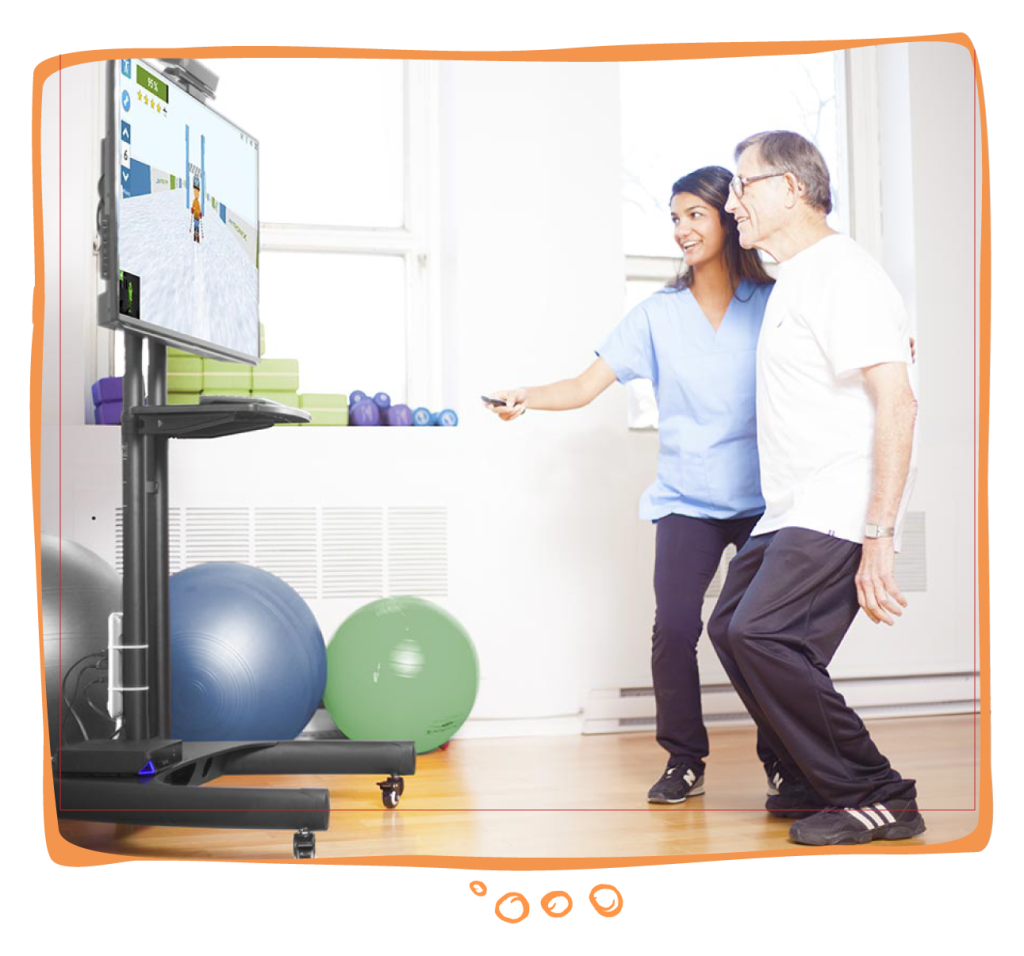
Jintronix is a virtual therapy system for rehabilitation and senior care. Image from Jintronix.
  • For physical recovery, motion-based platforms such as Wii Fit, Xbox Kinect, and Jintronix turn therapy into engaging routines. These systems help stroke survivors and orthopedic patients improve balance and coordination. Tools like Dance Dance Revolution and Rehabilitation Gaming System (RGS) add gamified movement and repetition to therapy, which promote motor function and patient motivation. 
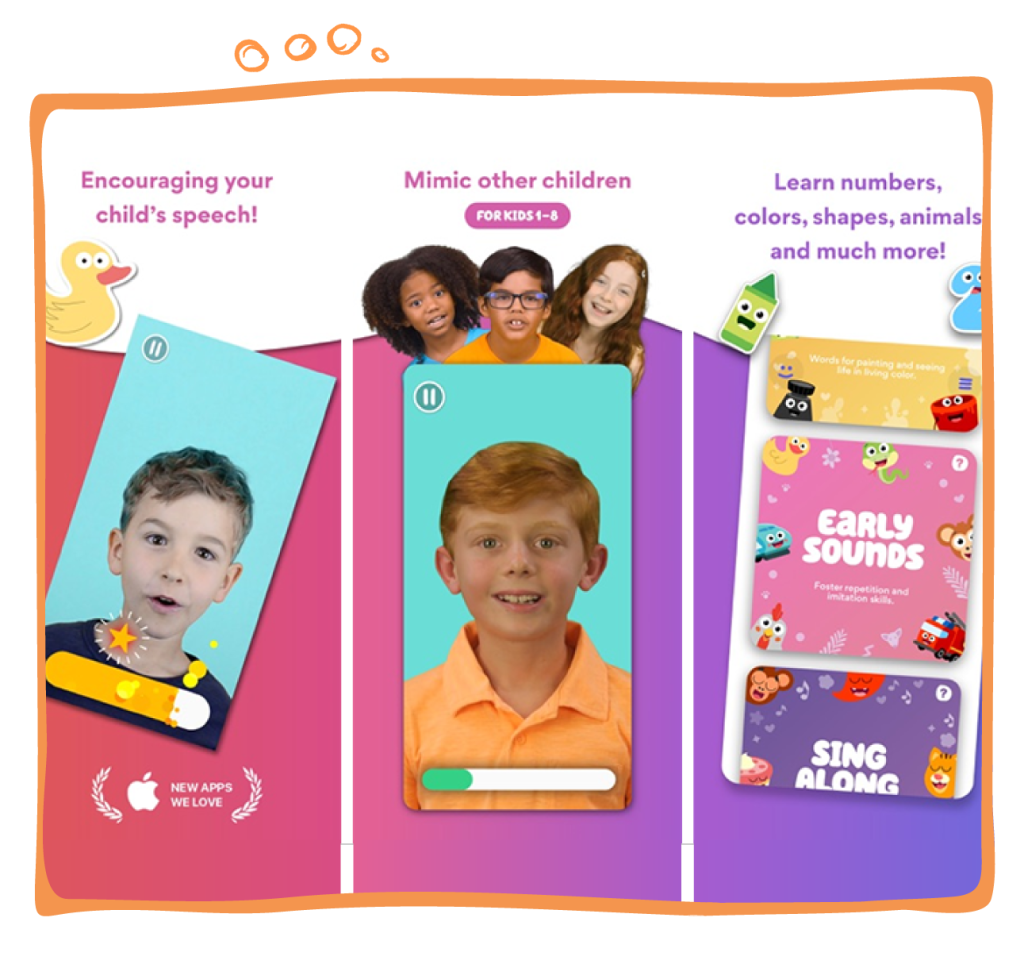
  • For speech and language rehabilitation, games and apps and games including Tactus Therapy, Speech Blubs, and Constant Therapy offer interactive ways for patients to improve pronunciation, comprehension, and vocabulary. These tools are often used by individuals recovering from brain injuries, aphasia, or developmental language delays. 
Speech Blubs is a fun language therapy app designed for kids. Image from Source Kids.
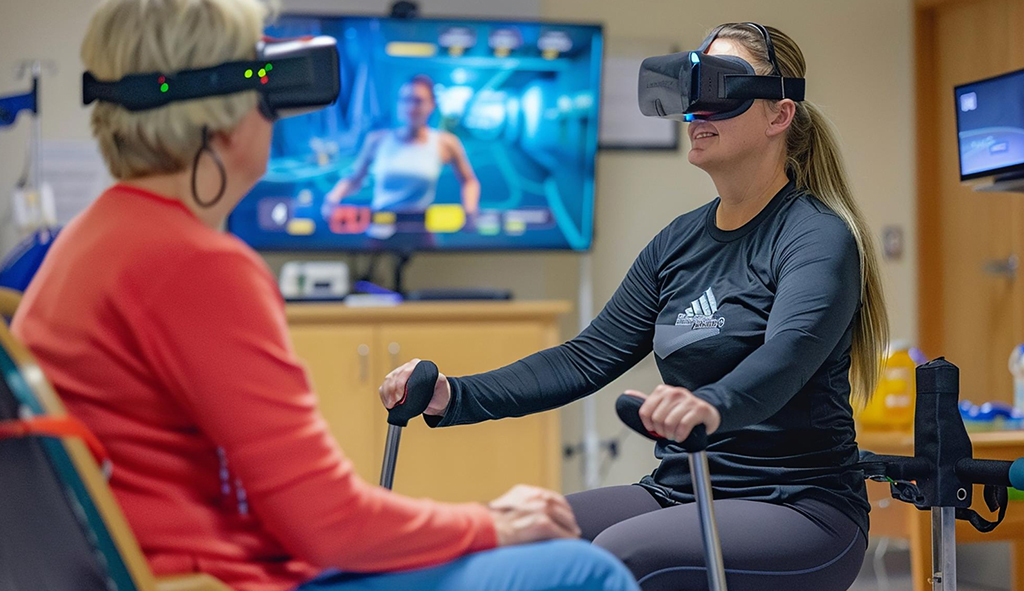
SeeMe is a rehabilitation platform that helps patients increase strength, balance, and range of motion through games. Image from Virtual Reality Rehabilitation.
SeeMe is a platform that helps patients increase strength and balance. Image from VR Rehabilitation.
  • In occupational therapy, task-based games like SeeMe, RehabStudio, and apps designed for Activities of Daily Living (ADLs) help patients practice real-world tasks including dressing, cooking, and organizing items. They’re often used by individuals recovering from traumatic injuries, neurological disorders, or age-related decline that affect their ability to manage everyday activities.

Many of these tools can also be used remotely through mobile apps, which offer adaptable programs that support ongoing recovery outside traditional clinical settings.  

By blending structure with play, these approaches are making rehabilitation more accessible and a bit more enjoyable for a wide range of patients. 

Challenges of Using Gaming for Therapy 

While the use of video games in therapy introduces exciting possibilities, it also comes with practical and technical challenges that must be addressed to ensure meaningful impact. These challenges span from access to usability, and they impact both patients and healthcare providers alike. 

Device Accessibility Not all patients have access to gaming devices like consoles or VR headsets, especially in low-income or rural areas. 
Adaptability to Patient Needs Games may not suit every patient’s abilities, thus requiring customization in terms of difficulty levels or mechanics to match therapeutic needs. 
Technical Barriers Many games require technical support, regular updates, or internet access, barriers for users with limited tech literacy or resources. 
Patient Engagement Some patients, particularly older adults or those unfamiliar with gaming, may feel uncomfortable or unmotivated to participate. 

Understanding these challenges helps developers and practitioners design more inclusive and adaptable therapeutic gaming experiences, ones that patients can actually access, engage with, and benefit from. 

The Impact of Language on Efficiency and Accessibility 

Language is more than a communication tool in therapeutic gaming, it’s a gateway to participation. When games lack proper localization, patients who don’t speak the default language may miss instructions, misunderstand feedback, or disengage entirely

To be effective, these tools must speak the patient’s language, literally and figuratively. This means localizing user interfaces, instructions, voiceovers, and progress tracking. But it also means adapting culturally specific content that may not resonate universally. 

A multilingual, well-localized game improves not only usability, but compliance, too. Patients are more likely to stick with therapy when the experience feels intuitive and respectful of their language and culture. Poor localization, on the other hand, can undermine patient trust and reduce the therapeutic value of even the most well-designed gaming tools. 

Conclusion 

Therapeutic video games are redefining rehabilitation by making it more engaging, personalized, and accessible to patients. From cognitive stimulation to physical recovery, the potential benefits are clear. But realizing their success depends on more than clever design or clinical validation. Language access and cultural adaptation are key to making these tools truly inclusive. 

As the use of therapeutic video games continues to grow, developers and healthcare professionals alike should recognize localization not as an add-on for these tools, but as a foundational component of effective therapeutic gaming. Because when the games become more universal, so does the healing they promote.  

Maximizing Engagement The Role of Interactive Media in Global Reach - Portada
15/07/2025

Maximizing Global Reach with Interactive Media

As audiences crave more immersive and personalized content experiences, interactive media has become a powerful tool for global engagement. From VR apps and gamified e-learning to interactive websites and mobile-first storytelling, the format is redefining how brands, educators, and creators connect with users worldwide. 

But to achieve true global reach, interaction must be more than functional, it must feel intuitive, culturally familiar, and emotionally relevant. That’s where interactive content localization plays a crucial role. 

Localization Challenges Unique to Interactive Content 

Unlike static or linear media, interactive experiences place users in the driver’s seat. Their choices, movements, and behaviors shape what happens next. The interactive element adds an extra layer of complexity to the process of localizing these media experiences, and it’s one that goes far beyond straight language translation.  

Key challenges include: 

  • User interface adaptation: Icons, menu structures, and button layouts must often be entirely redesigned, and not just translated, for different audiences. A layout that feels intuitive to one regional audience may feel confusing or overwhelming to another. Culturally adapted UI design, therefore, helps to ensure clarity, navigational ease, and user trust. 
  • Localized voice performances: Voice tone, dialects, and emotional delivery all influence how users connect with content. Poorly matched or overly generic voiceovers can disrupt immersion and reduce engagement. Delivering culturally authentic voice performances is essential for maintaining credibility and emotional impact with an audience. 

Platform Matters: Adapting Interactive Media by Channel 

Interactive media doesn’t live on just one device or platform; it can span mobile apps, VR headsets, gaming consoles, smart TVs, and much more. Localization teams understand that each of these platforms comes with its own set of considerations. 

Platform-Specific Localization 

Different platforms require tailored adjustments from localization teams. Mobile interfaces, for example, benefit from shorter text and simplified navigation, while VR demands immersive cues that align with movement and spatial awareness. Localization should match the way users naturally engage with each platform. 

Technological Constraints of Platforms 

Tech limitations can affect how localization is applied. Game engines or CMSs (Content Management System) may restrict text length, font choices, or layout flexibility. In VR, gesture-based controls may require cultural adaptation to remain intuitive across regions. 

Cross-Device Synchronization for Consistency 

When content spans multiple devices—like web, mobile, and VR—consistency becomes a paramount consideration. Text, visuals, and interactions must align with each device’s input methods (touchscreen, keyboard, controller) while delivering a unified experience. 

Cultural Sensitivity Based on Device Usage 

Device usage varies by region. In Asia, for example, mobile-first habits tend to shape faster-paced, vertical media experiences. In North America or Europe, console and VR formats are more common. Localization should reflect how different audiences prefer to interact with content. 

Shaping the Future of Global Interactivity 

As platforms evolve and user behaviors shift, interactive media localization is also entering a new phase. AI and automation are beginning to assist with personalizing user flows and adapting visual or audio elements in real time. These tools are helping teams scale faster, but the complexity of interactivity still demands a human touch for culturally sensitive decision-making

At the same time, audiences worldwide are growing more accustomed to localized content that doesn’t feel localized—it feels native. As the digital landscape continues to globalize, the bar for authenticity rises. This means content creators must increasingly balance scalability with the emotional and cultural specificity that drives true and meaningful engagement. 

The Takeaway 

Interactive media has the incredible potential to build meaningful connections with a global audience, but only when it’s localized with care. That means the treatment of every detail counts, whether a localization team is adapting a mobile app’s interface, refining voice performances for a regional market, or reimagining VR gestures for cultural alignment. 

When paired with the right platform-aware strategy and cultural insight, localization becomes a tool not only for access, but for inclusion. For businesses and creators looking to deepen audience engagement, interactive content that feels personal, intuitive, and respectful across cultures is no longer optional, it’s expected. 

Expanding Access to Mental Health Care Through Translation
01/07/2025

Expanding Access to Mental Health Care Through Translation

Good mental health care depends on trust, understanding, and open communication between providers and clients. But for patients who don’t speak the dominant language of the region where they live, tapping into this kind of support can feel impossible. When therapy options, treatment plans, or even basic patient rights are only available in one language, entire communities are left to cope without full access to the care they need

Language barriers can arise at every stage of a patient’s mental health journey—from intake forms with unfamiliar terms, to therapy worksheets they can’t fully understand. Without properly translated materials, patients may feel lost, discouraged, or unable to continue treatment. One of the most effective ways to remove these barriers is through the translation of key mental health resources to ensure that patients can truly understand and engage with their care. 

Translating Mental Health Resources for Better Patient Outcomes 

From initial screening information to ongoing treatment materials, written communication is essential to mental health care. Some of the most impactful documents that benefit from professional translation include: 

  • Patient intake forms and medical history questionnaires. Properly translated documents allow patients to share their symptoms and history with clarity. 
TRANSLATING MENTAL HEALTH RESOURCES FOR BETTER PATIENT OUTCOMES
  • Therapy worksheets and self-help guides. When clearly adapted, this content provides patients with the tools they need to fully engage with their treatment. 
  • Mental health awareness brochures and digital content. When provided in patients’ preferred languages, this material can educate entire communities on common conditions, coping strategies, and available support. 
  • Legal and administrative documents. It’s important for both clients and providers that patient rights, confidentiality agreements, and consent forms are fully understood by all parties. 

When these materials are made available in a patient’s native language, they enhance comprehension, encourage treatment adherence, and foster a sense of trust between patients and providers. 

The Role of Cultural Sensitivity in Mental Health Translation 

The accurate conveyance of mental health concepts from one language to another requires translators to not only have a fundamental understanding of terms in both languages, but also of any cultural nuances attached to those terms. Words related to depression, anxiety, or trauma, for instance, don’t always have direct equivalents in other languages, and some may carry stigma or culturally specific interpretations. In many Asian cultures, for example, discussing mental health openly is discouraged. So while a direct translation of “therapy” may not resonate, an alternate phrase that aligns with culturally accepted forms of support might. 

Culturalization, therefore, plays a key role in mental health translations. Expert linguists navigate these nuances to ensure clarity while respecting cultural differences. By prioritizing cultural awareness in translation, healthcare providers can ensure that multilingual mental health materials are both accessible and meaningful. 

Ensuring Confidentiality & Compliance in Mental Health Translation 

Mental health records and therapy documents often contain sensitive personal information, which means their privacy protection must be a top priority. Any written translations, must comply with strict regulations—especially HIPAA (Health Insurance Portability and Accountability Act) in the U.S., which governs the confidentiality of patient health information. 

ENSURING-CONFIDENTIALITY-_-COMPLIANCE-IN-MENTAL-HEALTH-TRANSLATION

Professional translation providers follow secure handling procedures to protect patient data. Such protocols ensure that: 

  • documents are translated by linguists trained in medical and mental health terminology, 
  • translations remain confidential and compliant with HIPAA and other regulations, and 
  • secure systems are used for document transfer and storage to prevent unauthorized access. 

Human Expertise for Peace of Mind 

Given the enormous amount of mental health-related content that can benefit from translation, it might at first seem simplest to tackle the job using automated translation tools, or enlisting the help of bilingual staff. However, relying solely on either approach can lead to misinterpretations, incomplete translations, privacy risks, and general compliance issues. Working with professional translators, on the other hand, ensures both accuracy and security at every step—and peace of mind for both patients and providers along the way.  

Conclusion 

In a world where mental health awareness is growing, it’s increasingly incumbent upon providers to make their care and resources available to all patients—regardless of the language they speak. With the help of professional translation services, mental health providers are truly reaching those who need their care, breaking down cultural barriers, and creating a more inclusive and equitable system in which every patient has the support and information they need to take charge of their well-being. 

No Player Left Behind A Look at Accessibility in Video Games - Portada
29/04/2025

No Player Left Behind: A Look at Accessibility in Video Games

As video games become an increasingly mainstream form of entertainment, the importance of accessibility has never been more crucial. Accessibility in gaming isn’t just about convenience—it’s about inclusion. By designing games with a wide range of player needs in mind, developers can deliver richer, more immersive experiences for everyone.  

Today’s accessibility efforts extend beyond physical accommodations to include digital and linguistic accessibility, helping ensure that no player is left behind. 

The Human Side of Accessibility 

For many gamers with visual, hearing, or cognitive impairments, the challenge isn’t skill—it’s design. Games that overlook accessibility features inadvertently exclude players who are eager to participate. Communities across social media and forums often share stories of frustration, where poor design choices prevent players from enjoying a game to its fullest. Making accessibility a priority implies not only making games easier, but also truly playable for all. Let’s explore what that looks like across different types of accessibility. 

Visual Accessibility 

Visual accessibility ensures that players with vision impairments can engage with games without barriers. This includes features like adjustable UI elements, customizable color settings, and high-contrast modes. For color-blind players, specific palettes can be problematic—particularly when gameplay relies on color-based mechanics. Localization teams must ensure that contrast and visual cues remain distinguishable across languages and regions. 

Players with obstructed vision benefit greatly from scalable UI, screen readers, and text-to-speech functions. These tools help users navigate menus, understand in-game prompts, and follow narratives without relying solely on sight. When localizing games, it’s essential to align visual tools with regional standards and expectations to support players with varying degrees of vision loss. 

Auditory Accessibility 

Auditory accessibility refers to designing games for players who are deaf or hard of hearing. Subtitles and closed captions are foundational features, but quality matters—captions should convey not just dialogue, but also relevant sound effects and emotional tones. Translations must retain these nuances, so players across all languages can experience the same immersion

In addition, visual indicators such as flashing lights, icons, or controller vibrations can help convey critical audio cues. Localization should adapt these elements to ensure clarity and cultural relevance across regions. Auditory accessibility plays a vital role in making multimedia—and by extension, games—enjoyable for all. 

Cognitive Accessibility 

Cognitive accessibility supports players who process information differently due to cognitive or learning disabilities. Features like simplified interfaces, structured tutorials, and logical game progression help reduce cognitive overload. 

For players with learning disabilities, tools such as text-to-speech, dyslexia-friendly fonts, and simplified language can make a significant difference. Localization here is key—clear, concise translations ensure instructions and narratives remain easy to understand, regardless of language or cognitive ability. 

The Takeaway 

Accessibility in gaming is more than a feature—it’s a philosophy that celebrates diversity in the player community. By incorporating thoughtful design and localization practices, developers can create games that are not just accessible, but truly inclusive. As the industry evolves, we must challenge ourselves to think beyond traditional barriers and embrace accessibility as a standard. Game developers and localization teams alike—it’s time to level up the way we think about inclusive play. 

Accessibility in User Experiences (UX) in the Healthcare Industry
26/03/2025

Accessibility in User Experiences (UX) in the Healthcare Industry

The growing importance of accessibility in healthcare user experiences (UX) cannot be overstated. According to the World Health Organization (WHO), over 1 billion people worldwide live with some form of disability. Many patients also struggle with limited health literacy or language barriers when navigating healthcare platforms such as patient portals, scheduling apps, and telemedicine services. Without inclusive UX design, these individuals face significant obstacles in accessing critical health services.  

By prioritizing accessibility, healthcare providers can ensure equitable care for all patients, reducing disparities and improving overall health outcomes. 

UX Accessibility and Its Importance in Healthcare 

Accessibility in UX refers to designing platforms, applications, and interfaces that can be easily used by everyone, regardless of their abilities or limitations. In the healthcare sector, where clear communication and intuitive navigation can be the difference between effective care and patient confusion, accessible design is crucial. Healthcare platforms must accommodate individuals with visual, auditory, motor, and cognitive impairments while also considering language and literacy challenges.  

The Benefits of Accessible and Tailored UX in Healthcare 

Accessible UX in healthcare benefits all stakeholders by bridging communication gaps and promoting inclusivity. Some of the key advantages include: 

  • Patient empowerment. Well-designed, accessible platforms enable patients to take control of their health. Features such as clear navigation, voice-assisted options, and simplified language help individuals schedule appointments, access medical records, and understand treatment plans with ease. 
  • Broader reach. An inclusive design allows healthcare organizations to serve a wider patient base, including those with disabilities and language barriers. By implementing accessibility features such as screen reader compatibility, multilingual support, and high-contrast visuals, providers can cater to diverse populations and ensure no one is left behind. 
  • Trust and engagement. When patients can easily access and understand healthcare platforms, they are more likely to trust and engage with healthcare providers. A seamless user experience fosters stronger patient-provider relationships, encouraging continued use of digital health tools and services.  

The Consequences of Poor UX Design 

Neglecting accessibility in healthcare UX design can result in serious consequences, including: 

  • Inefficiencies for healthcare professionals. Poorly designed platforms hinder healthcare professionals (HCPs) from efficiently accessing critical patient data, potentially delaying care and increasing the risk of errors. 
  • Erosion of trust and increased costs. When patients and providers struggle with usability, it reduces trust in digital healthcare solutions, discourages adoption, and leads to higher operational costs due to increased support requests and inefficiencies. 

The Role of Linguistic Services in Improving User Experience 

Language plays a crucial role in creating inclusive and effective user experiences. Linguistic services enhance healthcare UX by addressing key areas: 

  • Simplified communication. Translating complex medical jargon into plain, everyday language enhances understanding, particularly for patients with limited health literacy. 
  • Assistive compatibility. Ensuring text and audio content are accessible via screen readers and other assistive technologies broadens usability. 
  • Consistency across channels. Harmonizing tone, terminology, and formatting across apps, websites, and printed materials enhances the overall user journey, reducing confusion and improving accessibility. 

Conclusion 

Accessibility in healthcare UX is vital for ensuring equitable and effective patient care. By prioritizing inclusive design, healthcare organizations can empower patients, improve engagement, and enhance the efficiency of healthcare professionals.  

As digital healthcare continues to evolve, providers must commit to creating user-friendly, accessible experiences that cater to all individuals, ultimately leading to better health outcomes and a more inclusive healthcare system. 

AI Ethics Essentials Key Principles for Responsible Implementation
04/03/2025

AI Ethics Essentials: Key Principles for Responsible Implementation

As artificial intelligence (AI) tools become a vital part of modern business, it’s easy to view them as a silver bullet for company-wide efficiency, cost savings, and innovation. But, as the saying goes, with great power comes great responsibility. No matter how a company employs AI, using it ethically should not be a choice, but an essential practice to build trust, ensure fairness, and protect the people who use these tools or are impacted by them. 

Following sound ethical principles for AI, such as these laid out by the European Union, can make these sorts of positive differences right from the start. From there, organizations should take the time to periodically reevaluate their AI tools to ensure they continue to align with their values and safeguard their users. Here, we’ll cover seven fundamental concepts that every company should consider before implementing AI solutions. 

1. Transparency in The Usage of AI Solutions 

Transparency is the foundation of ethical AI. When team members or clients interact with AI solutions, they should be able to easily follow how the tool reaches its conclusions or outputs. It is recommended that all processes involving the use of AI be identifiable and documented for future analyses and management. 

2. Support for Human Agency 

AI should empower, not replace, human decision-makers. Keeping human power at the fore ensures that these tools act as partners to human expertise, rather than substitutes. AI-driven systems can offer recommendations and insights, but as the European Union’s AI guidelines note, “The right of end users not to be subject to a decision based solely on automated processing should be enforced.” Following this approach ensures that technology enhances, rather than diminishes, the human touch on the job at hand. 

3. Reliability and Safety 

Reliability and safety are essential pillars of ethical AI. Before implementation, it is crucial to verify that AI works as intended and performs consistently over time. Reliable usage of AI technology is especially important in areas with high-stakes outcomes like healthcare or pharmaceuticals, in which even small errors can have significant consequences. 

4. Diversity, Non-discrimination & Fairness 

An ethical approach to AI usage respects diversity and prioritizes inclusion, which means it must be tested carefully for unintended biases and further evaluated to ensure it serves a wide range of users equitably. While AI systems aren’t inherently designed with inclusivity in mind, using them responsibly can support diverse populations and reinforce a company’s commitment to fairness. The goal should be to create or leverage tools that acknowledge and adapt to the unique backgrounds of all users.  

5. Privacy Protection and Data Security 

Data security is paramount in ethical AI use, as the technology relies on vast amounts of information. For clients, prioritizing their privacy means ensuring their sensitive or proprietary information is securely managed across platforms and departments. To protect client data, businesses should choose AI providers with robust security measures and transparent data practices that safeguard information at every stage. 

6. Societal & Environmental Wellbeing 

In an age of climate awareness, it is also essential to consider AI’s environmental footprint. AI can be energy-intensive, so opting for energy-efficient solutions internally or partnering with external providers with green practices is important. Environmentally responsible AI solutions are those that help solve business challenges in a sustainable way that respects our planet’s resources.  

7. Accountability 

Accountability ensures that companies remain responsible for their AI tools’ actions. Having clear processes to audit and evaluate AI decisions is essential. This way, businesses can address issues, learn from them, and continue to improve. Accountability in AI use demonstrates to users and stakeholders alike that you take responsibility for your actions. 

A Final Thought for Businesses 

Ethical AI implementation is not just about staying ahead in innovation; it’s about doing so in a way that upholds trust, transparency, and inclusivity. By following these principles, you will be well-positioned to implement AI responsibly, thus making a positive impact on both your clients and society as a whole. For industries like translation, healthcare or pharmaceuticals in which data security and cultural sensitivity are paramount, adhering to ethical AI principles helps deliver not only reliable results, but also peace of mind. 

Section 508 Compliance Creating Accessible Documents
25/02/2025

Section 508 Compliance: Creating Accessible Documents

Digital accessibility is more than a legal obligation—it’s a moral commitment to inclusivity in the digital age. Section 508 compliance ensures that digital documents are accessible to individuals with disabilities, removing barriers and promoting equality. Organizations, especially those within or partnering with the government, must adhere to these standards to avoid legal risks while also expanding their reach and building trust by demonstrating a commitment to diversity and inclusion. 

Let’s take a closer look at the growing importance of accessibility and how to tackle this mission in your organization.  

Features of Accessible Documents: What to Consider 

Ensuring document accessibility requires integrating specific features across various formats, including standard documents and specialized materials like e-learning courses.  

These are essential elements to consider: 

  • Document properties: Assign meaningful titles, enable bookmarks for easy navigation, and set the correct language to enhance compatibility with screen readers. 
  • Font and contrast: Use readable fonts with high contrast between text and background. This principle applies to all visual elements, including icons and graphics. Increasing font size can further improve visibility and user experience. 
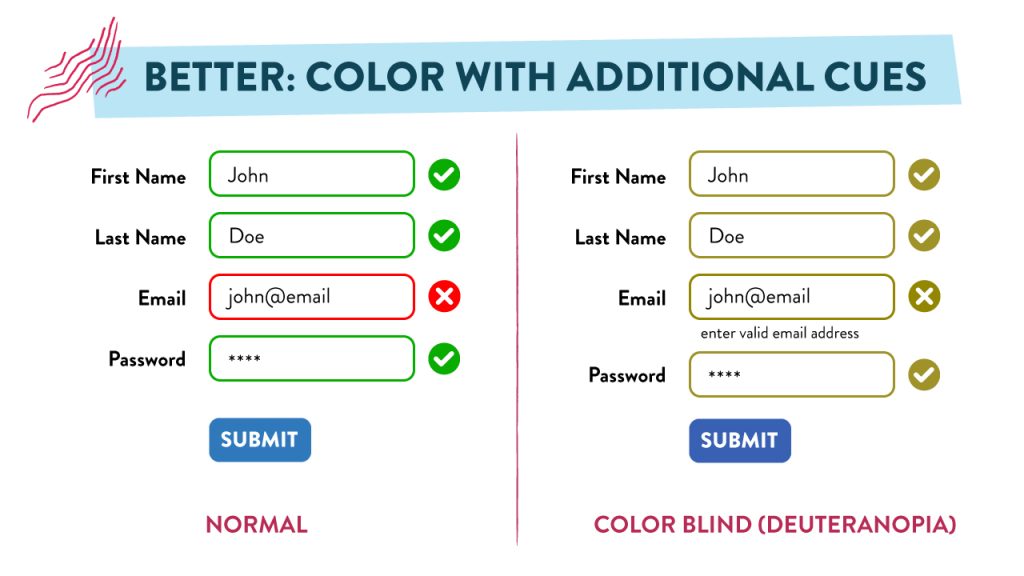
  • Usage of color: Avoid relying solely on color to convey meaning. For example, instead of using only red to indicate an error, incorporate text or symbols for clarity. Ensure color combinations are accessible to individuals with color blindness by avoiding red-green pairings. 
  • Reading order: Structure content logically, numbering elements appropriately while excluding decorative items from the reading flow. 
  • In-text modifications: Avoid splitting words with hyphens at line breaks and maintain consistent spacing between lines and paragraphs for readability. 
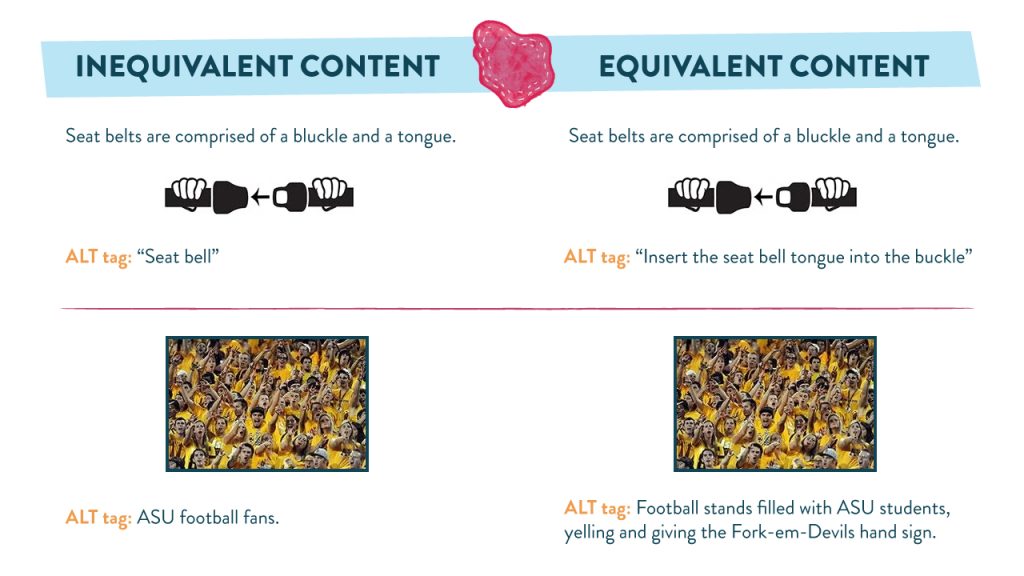
  • Alt text for visuals: Provide concise, descriptive alt text for images and logically organize hyperlinks to prevent confusion. 
Examples of ALT text for visuals 1
Arizona State University
  • Tables: Include summaries and properly label headers to facilitate navigation for users relying on assistive technology. 
  • Multimedia content: Provide captions and audio description for videos, transcriptions for audio content, and alternative text for visual elements to ensure accessibility across all media formats. 
Example of form with colors with additional clues (deuteranopia).
Graphic from Crux Collaborative

While these features are essential for creating accessible documents, not all will apply to your future projects. Collaboration with an accessibility specialist helps balance mandatory requirements with optional features tailored to specific projects. 

What to Expect When Requesting Accessible and Localized Documents 

Whether a client requires accessibility features alone or a combination of accessibility and localization, partnering with a knowledgeable Language Service Provider (LSP) ensures a smooth workflow and compliance with inclusivity standards.  

Here’s what to expect: 

  • Initial consultation and planning: The process begins with a collaborative discussion where the LSP identifies required accessibility features and recommends additional enhancements based on the document’s purpose and audience. This step aligns expectations, budget, and regulatory standards. 
  • Localization with accessibility features maintained: If localization is needed, the LSP ensures that content is culturally and linguistically adapted while maintaining accessibility features. Translated alt text, captions, and accessible navigation remain intact for an inclusive experience across different languages and regions. 
  • Final review and quality assurance: Desktop Publishing (DTP) experts conduct a comprehensive review to ensure quality across the board. Accessibility, formatting, and localization elements all should align professionally. Any discrepancies in design, structure, or compliance are addressed to meet the highest standards. 

The Takeaway 

Accessibility is not just about compliance—it is about fostering an inclusive digital world. By partnering with an experienced LSP, organizations can ensure their documents are not only accessible and compliant but also effectively adapted for diverse audiences. Investing in accessibility today helps create digital environments that empower all users and cultivate a culture of inclusion for the future.