Building Parental Trust Through the Culturalization of Digital Games for Kids
15/10/2025

Building Parental Trust Through the Culturalization of Digital Games for Kids

Parents don’t just choose games for their children based on appearance. Appealing visuals are important, but primarily, parents are drawn to games that feel safe, familiar, and respectful of their values. For developers who want to communicate those elements of their product to parents, this is where culturalization takes center stage. Culturalization is more than a layer of language translation, it is a process that allows teams to tailor design, content, and player interactions so that these game elements reflect local customs and expectations.  

That level of care can be the reason a parent installs a game, recommends it to others, or allows it to become part of their child’s daily routine. In a competitive global market, cultural alignment in a game serves as a powerful trust signal. And in children’s content, trust is the strongest driver of long-term success. 

Why Trust Makes the Difference 

In every region of the world, families harbor their own definitions of what feels appropriate. These standards vary across countries and cultures, which might mean, for example, that a game that aligns well with parenting norms in Argentina may not feel suitable to families in Japan. 

Parents often search for tools that reinforce their local values, support early learning goals, and align with their culture’s social expectations. Games that have been culturalized might meet these criteria by celebrating local holidays, featuring artwork that reflects regional clothing, or presenting with an interface that supports languages written right to left. 

When games speak the language of a culture both verbally and visually, they show families they care not only about access, but also connection. This added level of care helps position the game to parents as a reliable, respectful option for their child’s learning and engagement

What a Culture-First Approach Looks Like 

Culturalization works best when it’s implemented early in a game’s development. That’s because a culture-first mindset can shape the product at every level of creation: Decisions about character and storylines, voice tone, and even the use of gestures can be made more intentional and beneficial with cultural insight. 

The process of culturalization in children’s games also becomes more effective when there is close collaboration between developers, artists, UX designers, and localization experts. Linguists offer valuable context that helps teams avoid common missteps and create experiences that feel coherent and relevant. 

Some of the clearest rewards of culturalization include: 

  • Stronger trust in the product from parents and caregivers 
  • Higher retention across different markets 
  • Positive word of mouth in parenting communities 
  • Fewer adjustments required for market compliance 

When families feel seen and respected, they are more likely to return to a game, explore more features, and engage more often. 

Recognition Fuels Retention 

Parents want their children to feel safe and represented in digital spaces. When a game reflects local traditions or offers content in a language they use at home, the experience becomes more personal. 

This recognition encourages trust, and trust leads to loyalty. Games that invest in cultural nuance are more likely to stay installed and recommended, especially among families who carefully evaluate digital tools for children. 

By contrast, a product that misses important cultural cues may lead to disengagement. Families that feel disconnected may literally disconnect, even if a game’s design is polished and the educational value is high. 

Conclusion 

Culturalization strengthens every layer in the development of a kids’ game because it allows creators to connect with families in meaningful ways. When development and localization teams collaborate on a shared goal, they produce content that supports customer trust, that in turn fosters sustainable growth and continued engagement. 
Healing Through Gaming The Role of Video Games in Therapy - Portada
12/08/2025

Healing Through Gaming: The Role of Video Games in Therapy

The idea that video games could support physical and cognitive healing might have sounded farfetched a few years ago. But today, it’s a growing field backed by research, innovation, and real-world results. Interactive games are increasingly being used in clinical and therapeutic settings to aid rehabilitation, improve motor function, and boost cognitive resilience. And when these tools are created with linguistic and cultural accessibility in mind, they can foster greater inclusion, engagement, and recovery for diverse patient populations. 

Gaming for Cognitive and Physical Rehabilitation 

Video games are becoming powerful tools in rehabilitation for helping patients regain cognitive and physical function in ways that feel more engaging and less clinical. Part of that success is thanks to their interactive design, which encourages repetition, focus, and motivation, key ingredients in effective therapy. The therapy spaces benefiting from such games are manifold:  

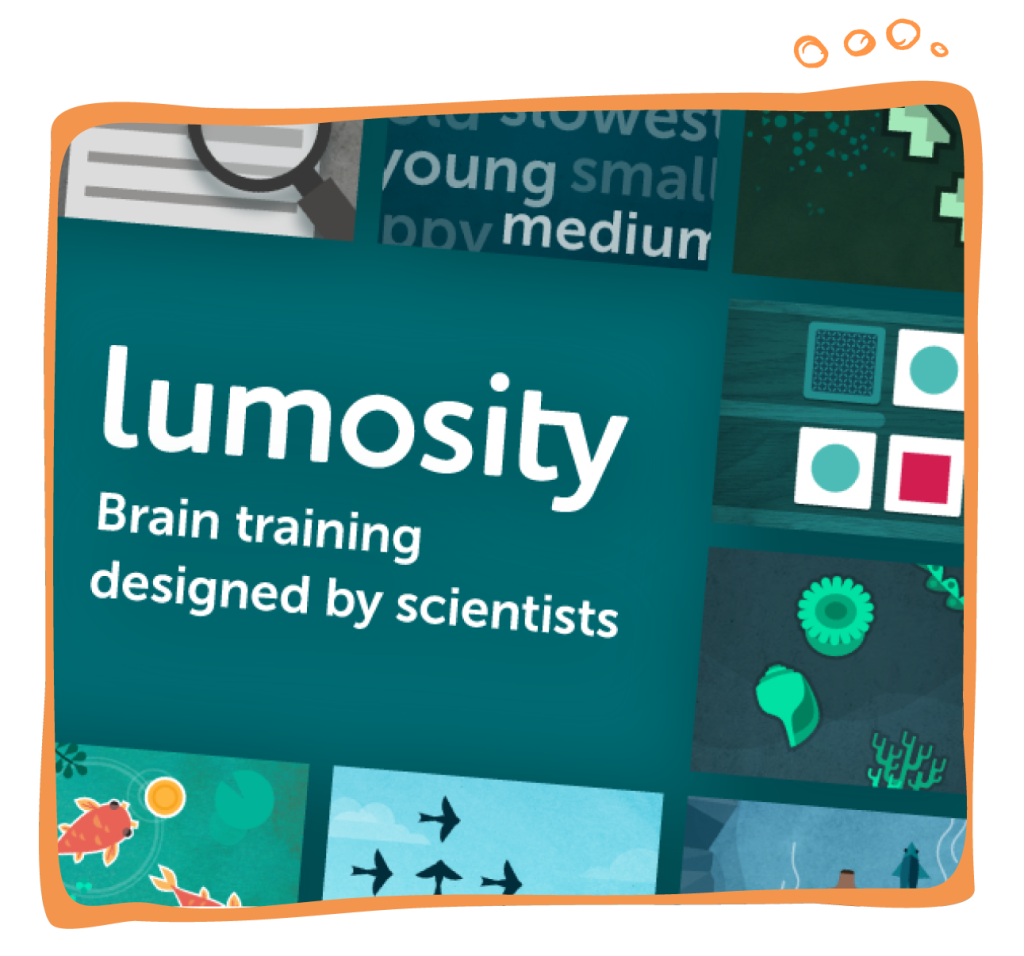
  • In cognitive rehabilitation, games like Brain Age, Lumosity, and CogniFit support memory, focus, and mental agility in older adults and brain injury patients. Platforms like NeuroRacer and its FDA-cleared successor EndeavorRx are used to enhance attention control in children with ADHD while offering structured, adaptive tasks grounded in cognitive neuroscience. 
Lumosity is a brain training game designed by scientists. Image from Lumosity.
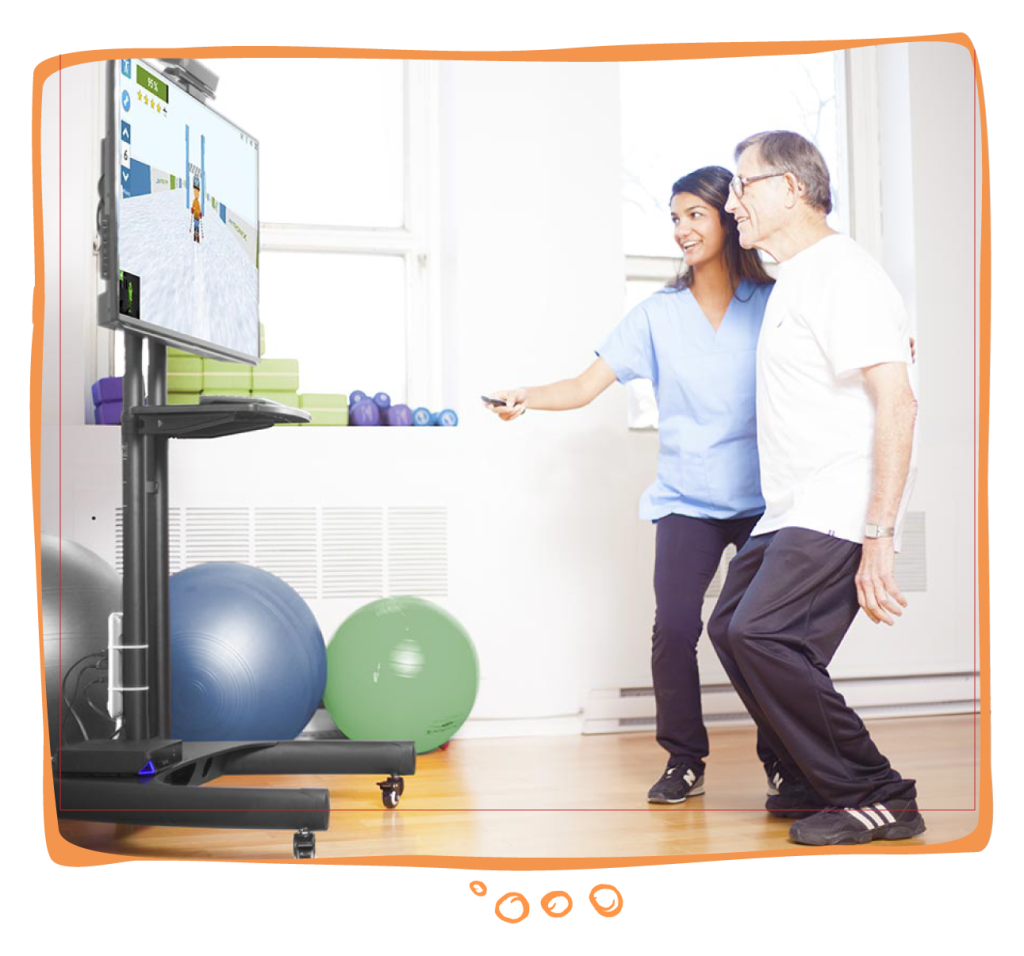
Jintronix is a virtual therapy system for rehabilitation and senior care. Image from Jintronix.
  • For physical recovery, motion-based platforms such as Wii Fit, Xbox Kinect, and Jintronix turn therapy into engaging routines. These systems help stroke survivors and orthopedic patients improve balance and coordination. Tools like Dance Dance Revolution and Rehabilitation Gaming System (RGS) add gamified movement and repetition to therapy, which promote motor function and patient motivation. 
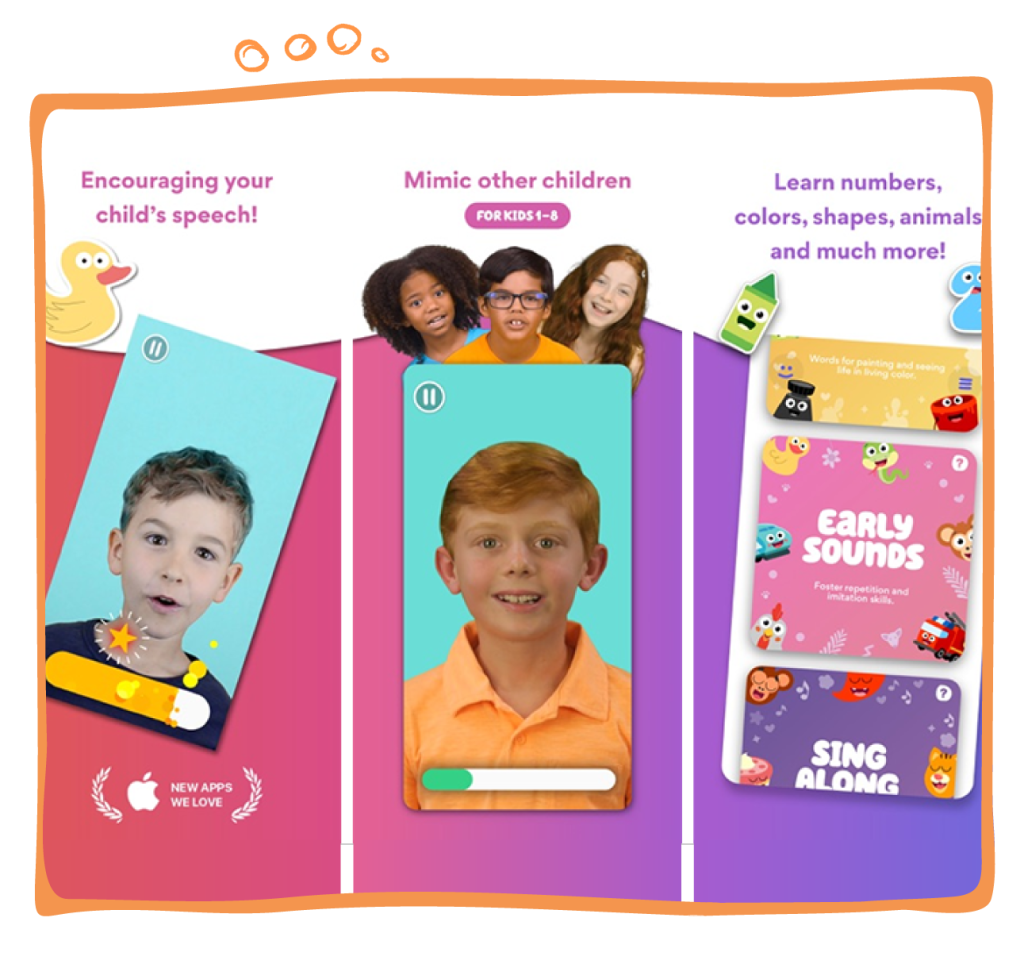
  • For speech and language rehabilitation, games and apps and games including Tactus Therapy, Speech Blubs, and Constant Therapy offer interactive ways for patients to improve pronunciation, comprehension, and vocabulary. These tools are often used by individuals recovering from brain injuries, aphasia, or developmental language delays. 
Speech Blubs is a fun language therapy app designed for kids. Image from Source Kids.
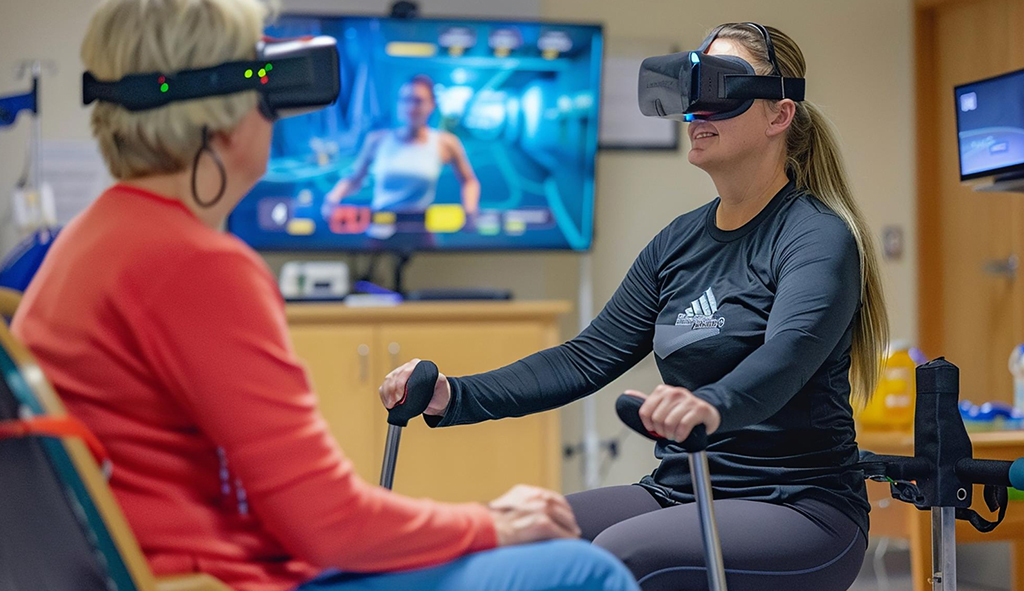
SeeMe is a rehabilitation platform that helps patients increase strength, balance, and range of motion through games. Image from Virtual Reality Rehabilitation.
SeeMe is a platform that helps patients increase strength and balance. Image from VR Rehabilitation.
  • In occupational therapy, task-based games like SeeMe, RehabStudio, and apps designed for Activities of Daily Living (ADLs) help patients practice real-world tasks including dressing, cooking, and organizing items. They’re often used by individuals recovering from traumatic injuries, neurological disorders, or age-related decline that affect their ability to manage everyday activities.

Many of these tools can also be used remotely through mobile apps, which offer adaptable programs that support ongoing recovery outside traditional clinical settings.  

By blending structure with play, these approaches are making rehabilitation more accessible and a bit more enjoyable for a wide range of patients. 

Challenges of Using Gaming for Therapy 

While the use of video games in therapy introduces exciting possibilities, it also comes with practical and technical challenges that must be addressed to ensure meaningful impact. These challenges span from access to usability, and they impact both patients and healthcare providers alike. 

Device Accessibility Not all patients have access to gaming devices like consoles or VR headsets, especially in low-income or rural areas. 
Adaptability to Patient Needs Games may not suit every patient’s abilities, thus requiring customization in terms of difficulty levels or mechanics to match therapeutic needs. 
Technical Barriers Many games require technical support, regular updates, or internet access, barriers for users with limited tech literacy or resources. 
Patient Engagement Some patients, particularly older adults or those unfamiliar with gaming, may feel uncomfortable or unmotivated to participate. 

Understanding these challenges helps developers and practitioners design more inclusive and adaptable therapeutic gaming experiences, ones that patients can actually access, engage with, and benefit from. 

The Impact of Language on Efficiency and Accessibility 

Language is more than a communication tool in therapeutic gaming, it’s a gateway to participation. When games lack proper localization, patients who don’t speak the default language may miss instructions, misunderstand feedback, or disengage entirely

To be effective, these tools must speak the patient’s language, literally and figuratively. This means localizing user interfaces, instructions, voiceovers, and progress tracking. But it also means adapting culturally specific content that may not resonate universally. 

A multilingual, well-localized game improves not only usability, but compliance, too. Patients are more likely to stick with therapy when the experience feels intuitive and respectful of their language and culture. Poor localization, on the other hand, can undermine patient trust and reduce the therapeutic value of even the most well-designed gaming tools. 

Conclusion 

Therapeutic video games are redefining rehabilitation by making it more engaging, personalized, and accessible to patients. From cognitive stimulation to physical recovery, the potential benefits are clear. But realizing their success depends on more than clever design or clinical validation. Language access and cultural adaptation are key to making these tools truly inclusive. 

As the use of therapeutic video games continues to grow, developers and healthcare professionals alike should recognize localization not as an add-on for these tools, but as a foundational component of effective therapeutic gaming. Because when the games become more universal, so does the healing they promote.  

Mobile Gaming — A Market Opportunity in Brazil - PORTADA
06/09/2022

Mobile Gaming — A Market Opportunity in Brazil

Video game creators should listen up! There is no shortage of opportunities for mobile game creators to find success in the Brazilian market. Because so many Brazilians utilize public transportation, they can kick back and relax while on the move. Passing the time by playing mobile video games is extremely common in this part of the world, so let’s examine some of the market opportunities for mobile gaming in Brazil. 

A Look at the Brazilian Mobile Market

The Brazilian mobile gaming market is booming. Brazil is Latin America’s largest market for mobile gaming in regard to both the amount of players and how much revenue is generated. With more than 88.4 million players and over $1.0 billion in revenue expected in 2021, Brazil is a force to be reckoned with in the gaming community. 

Why is this market in particular so hot right now? There’s a variety of factors contributing to this surge of growth in Brazil. Alongside the appeal of passing time on public transportation, taxation policy changes surrounding gaming consoles in recent years have helped the industry expand. The accessibility of mobile phones, in the sense that they are now affordable and most Brazilians have them, has also helped this industry thrive. According to Newzoo, the most commonly used gaming device in Brazil is the smartphone (83%), which leaves a lot of room for growth specifically in the mobile gaming industry. 

What They’re Playing

Brazilians play a wide variety of mobile games. In 2020, the most downloaded mobile games from the Apple App Store were:

Free games

  • ‘Among Us’
  • ‘Garena Free Fire’
  • ‘8 Ball Pool’
  • ‘Call of Duty Mobile’
  • ‘Brain Out’
  • ‘Subway Surfers’
  • ‘One!’
  • ‘Magic Tiles 3: Piano Game’
  • ‘Brain Test: Mind Games’
  • ‘Gardenscapes’

Paid games

  • ‘Minecraft’
  • ‘Plague Inc.’
  • ‘Pou’
  • ‘Hitman Sniper’
  • ‘RFS – Real Flight Simulator’
  • Farming Simulator 20
  • ‘Bully: Anniversary Edition’
  • ‘True Skate’
  • ‘GTA: Liberty City Stories’
  • ‘Stardew Valley’

Why They’re Playing

Alongside passing time on long bus rides, Brazilians turn to video games to de-stress. Because of this, Brazilians tend to enjoy playing mobile games that are extremely immersive and that absorb them into the game, while distracting them from reality for a little while. Strategy, role-playing, and action games are super popular in Brazil because of their ability to be so engaging. Mobile game advertisers should look for opportunities to sell their games as a way to relax and escape everyday stressors like work. 

The Future of this Market

Despite the growing popularity of video games in Brazil, there is still room for this market to expand. Only a little more than one-third of the Brazilian population expresses an interest in video games. Because those uninterested in games are unlikely to own gaming devices, there is a better chance that their first foray into gaming would be on a mobile device that they already own and use for other purposes. Brazil has a population of more than 212 million people and 81% of those people already own smartphones, making smartphone users a goldmine waiting to be tapped. 

What is Gamification in E-Learning and Why is it so Important?
24/09/2020

What is Gamification in E-Learning and Why is it so Important?

Who doesn’t want to play a game at work or in school? Of course, life can’t be all fun and games, but when it comes to e-learning, games are all the rage. More specifically, gamification in e-learning is a popular and very effective learning technique. In fact, a University of Colorado study discovered that users of gamification during the learning process scored higher in both fact- and skills-based learning assessments. Gamification also helped improve retention rates when used in workplace learning.

Let’s break down exactly what gamification is and how to use gamification in e-learning.

What is Gamification?

The term gamification refers to the usage of the mechanics, dynamics, game thinking, and aesthetics found in games. The objective of this technique is to improve user experiences, as well as boost the motivation and engagement of the user. Because these techniques can blend fun with effectiveness, they’ve found a natural fit in e-learning systems. Gamification can help engage users, motivate actions, promote learning, and encourage them to solve problems. All of which can help the user understand and retain the educational material better. 

What are the Key Elements?

There are several design elements that suit the needs of gamification in e-learning, such as:

  1. Point systems
  2. Badges
  3. Trophies
  4. Customization
  5. Leader boards
  1. Progress levels
  2. Progress tracking
  3. Challenges
  4. Feedback
  5. Social engagement loops

All of these elements are intended to encourage the user to engage, boost both motivation and retention, and lead to an overall more positive learning experience. This technique takes advantage of the competition instinct most people possess and encourages productive behavior.

Why Does it Work for E-Learning?

A 2015 study in the Journal of Computer Sciences found that when gamification was offered in an online informatics course, students who enrolled in the gamification version of the course performed better and retained more than those who took the course without gamification techniques included. 

The learning process requires high motivation, which is something gamification design elements can assist with in e-learning systems. Gamification stems from the basic concepts of gaming. A game is a goal-focused activity with reward mechanisms in place, which is what makes playing them so satisfying. By utilizing gamification in e-learning, you can allow the user to undertake specific tasks to achieve a desired goal (which in this case is learning the material). Tracking and rewarding their progress is possible as well, which can help improve motivation and engagement. 

Widening Horizons

One way to create extremely engaging e-learning content is to make training materials available in multiple languages to accommodate your staff’s diverse needs. Allowing employees to learn in their native language can help improve retention and engagement, while simply making learning materials easier to understand and digest. 

When implementing gamification techniques in translated e-learning materials, it’s important to choose a partner with experience in the target language and the subject matter of the educational materials. Being familiar with how games and their mechanics work is important too. In this respect, experience with video game localization and transcreation are crucial to the success of implementing gamification techniques in e-learning materials.