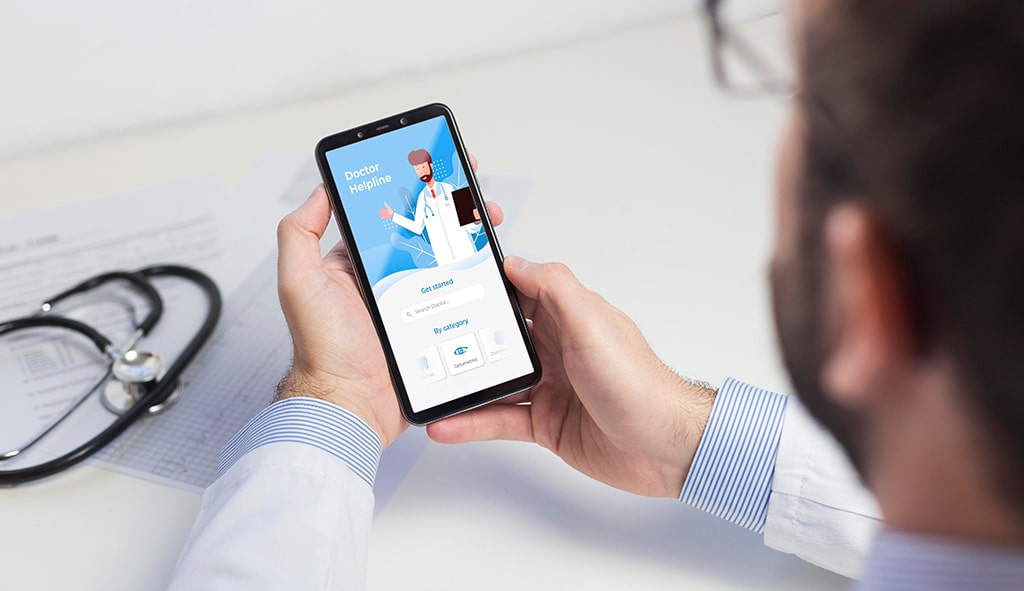

Localizing healthcare software requires a thoughtful approach that balances linguistic precision with technical expertise. From clinical platforms to patient-facing apps, your localization provider plays a critical role in ensuring that every translation is accurate, secure, and aligned with your product.
The right partner should offer proven industry experience, robust compliance practices, ISO certifications, and a communication style that fits your team. If you’re planning a localization project, here are six essential considerations for choosing a provider equipped to support your software at every stage.
1. Proven Experience in Healthcare Localization

Healthcare localization requires a deep understanding of medical language and the sensitivity to effectively adapt patient-facing content clearly and accurately. Choose a provider with solid experience in healthcare translations. A partner familiar with medical terminology, regulatory standards, and audience-appropriate tone will be better equipped to support patients, clinicians, and care teams across platforms.
2. ISO Certifications That Reflect Quality and Security

Industry standards are a strong indicator of a provider’s commitment to quality, security, and consistency. When evaluating a language service provider, look for certifications such as ISO 9001 for quality management, ISO 17100 for translation standards, ISO 27001 for information security, and ISO 18587 for post-editing of machine translation. It’s good practice to ask which certifications a vendor holds, as these reflect a proactive approach to reducing risk and maintaining high-quality results across all projects.
3. HIPAA Compliance and Secure Data Practices

Your localization partner will likely handle files containing ePHI (electronic protected health information). That’s why it’s essential for them to follow HIPAA-compliant workflows and be able to demonstrate a clear understanding of the security and privacy measures required in healthcare. Ask whether their teams undergo HIPAA training and how they handle access control, secure file sharing, and patient data protection. The right partner will have clear policies in place to reduce the risk of breaches and keep your data safe.
4. Technical Expertise in Software Localization

Healthcare software localization requires navigating complex file types like HTML, JSON, and XML, and adapting them without breaking functionality. A skilled localization provider will have the technical know-how to work with these formats and use the right tools to ensure clean integration. They should also be able to recommend translation tools that fit your workflow and technical needs. Look for a team that stays current with evolving technologies and can adapt quickly when systems or content change.
5. Communication That Matches Your Culture

Localization projects bring together multiple specialists across different phases, including translators, project managers, developers, and reviewers. That’s why it’s essential to work with a partner who not only manages these workflows but also communicates in a way that aligns with your internal culture and values. Ask how they handle feedback loops and what communication channels they use. A partner whose communication style aligns with yours will be easier to collaborate with. When they also share your expectations for responsiveness and adaptability, it becomes much easier to avoid delays, resolve issues efficiently, and maintain quality across every stage of the process.
6. Ongoing Support and Scalability

Localization is rarely a one-time project. Software platforms evolve continuously with updates, new features, and regulatory changes. Your provider should be equipped to support long-term localization needs. Ask whether they have experience managing extended or continuous projects, and how they streamline future workflows. A partner who understands your product structure and terminology from the start can help ensure consistency, reduce rework, and scale your localization efforts efficiently over time.
Conclusion
Whether you’re localizing a patient portal or expanding into new markets, the right localization partner will make the process smoother, safer, and more effective. By choosing a provider with proven healthcare experience, strong communication practices, and long-term support, you’ll be better equipped to deliver software that’s trusted by patients, care teams, and healthcare providers alike.