
How Multilingual QAMs Keep Teams and Standards Aligned
As localization projects grow in size and technical scope, their quality can no longer be assured by isolated checks or be based on a sole individual’s expertise alone.

As localization projects grow in size and technical scope, their quality can no longer be assured by isolated checks or be based on a sole individual’s expertise alone.

Modern localization QA is a collective effort shaped by people, processes, and technology. Reviewers, proofreaders, and QAMs contribute different layers of oversight, while automated tools support scale and consistency. Together, they form a quality assurance ecosystem that adapts to change while maintaining its direction.
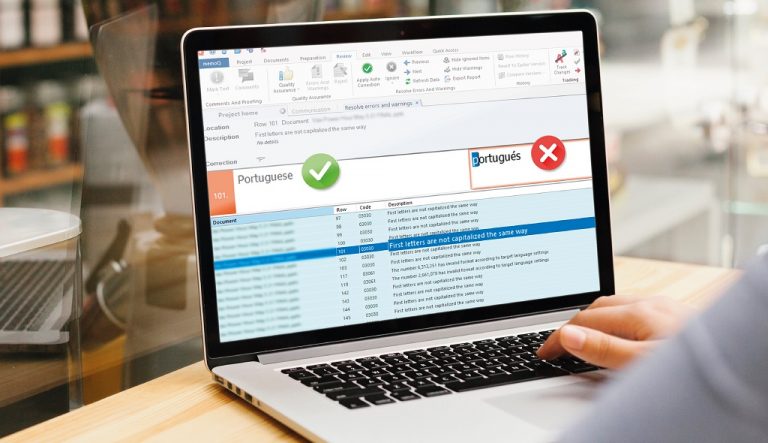
Due to the fact that some language service providers offer integral solutions for globalized markets or products, they sometimes tackle projects that don’t involve a unique language pair, (…)

It’s true that, at least for now, no computerized tool can replace the linguistic knowledge inside a reviewer’s mind; AI solutions have difficulties reading tone, register or the nuances of context and how it affects meaning (…)

Within the localization industry, there is a wide range of technology solutions. For instance, some computer-assisted translation (CAT) tools are specifically designed to translate mobile applications, while others work perfectly for website localization or software development (…)

The key to any successful translation project is quality. Assuring the highest quality work is what sets Terra Translations apart from other language service providers. With quality as a cornerstone of our workflow, we (…)