
How-Multilingual-QAMs-Keep-Teams-and-Standards-Aligned-Portada
22/04/2026

How Multilingual QAMs Keep Teams and Standards Aligned

As localization projects grow in size and technical scope, their quality can no longer be assured by isolated checks or be based on a sole individual’s expertise alone. Maintaining consistency across dozens of languages, vendors, and workflows requires a more structured approach, and this is where multilingual quality assurance managers, or QAMs, play a central role. 

Rather than focusing on a single language or deliverable, QAMs oversee quality with a systemic approach. Their work connects linguistic teams, operational processes, and quality standards to help organizations scale without losing clarity or control. 

Orchestrating Quality Across Languages and Workflows 

Multilingual QAMs turn quality assurance into a coordinated system through a number of responsibilities that typically include: 

  • Defining shared quality frameworks that apply consistently across languages, vendors, and projects, so teams work with the same expectations from the start. 
  • Aligning stakeholders on quality criteria so that translators, reviewers, project managers, and clients interpret guidelines in the same way. 
  • Coordinating feedback loops, to ensure evaluations are clear, actionable, and traceable instead of fragmented or contradictory. 
  • Identifying root causes of issues, whether they stem from terminology gaps, unclear instructions, tooling limitations, or process breakdowns. 

Through this orchestration, quality management shifts from a reactive task to a preventive practice. Instead of correcting the same issues repeatedly, multilingual QAMs help teams establish a shared understanding of the project and stronger processes to execute it, which creates a more stable foundation for quality at scale.

Standards, Compliance, and Practical Application 

Quality management is often tied to industry standards, such as ISO frameworks. While these standards provide structure, they only become meaningful when applied thoughtfully in day-to-day work. In that sense, multilingual QAMs help translate abstract requirements into practical procedures that teams can follow. 

This includes not only defining how reviews are conducted, or feedback is documented, but how corrective actions are tracked over time. QAMs also ensure that quality data is both collected and analyzed so teams can identify trends and improve performance across projects. 

Technology supports this effort by offering visibility and traceability. Automated checks, dashboards, reporting tools and more help QAMs monitor quality at scale. Still, human judgment remains essential when it comes to interpreting results and determining which actions will genuinely improve outcomes. 

Communication as a Quality Safeguard 

One of the most overlooked aspects of quality management is communication. Multilingual projects involve many handoffs, and even small misunderstandings can lead to inconsistencies or delays. QAMs act as conduits to ensure information flows clearly between linguistic and operational teams. 

By centralizing feedback and defining priorities, QAMs reduce noise and duplication of effort. This clarity allows teams to focus on delivering quality rather than reacting to conflicting instructions or late-stage corrections. Over time, this approach builds trust as teams understand what is expected, and clients gain confidence in the process. The result? Quality becomes a shared responsibility rather than a final checkpoint. 

Conclusion 

Multilingual QAMs play a crucial role in maintaining quality as localization efforts scale. By aligning teams, standards, and workflows, they help organizations manage complexity without sacrificing consistency or clarity. 

In a landscape shaped by automation and global collaboration, quality management depends less on isolated checks and more on coordinated systems. That’s why the structure provided by multilingual QAMs goes such a long way to ensure that quality remains intentional, quantifiable, and sustainable across languages and projects. 

07/04/2026

How Linguists Balance Accuracy and Consistency in Healthcare UI Translations

Healthcare software often needs to serve two functions at once: it must communicate medically accurate information and speak plainly to patients. Striking a balance between these functions is especially delicate in user interfaces (UI), where every word must be short and clear. So how do linguists ensure a translated UI is both technically correct and easy to understand?

Keeping It Clear Without Sacrificing Meaning

Image of Jorge Zeghen, Translator & Editor of Terra.

Patients use digital health tools in moments of stress, urgency, or vulnerability. That’s why many healthcare providers today prioritize plain language. For localization teams, this means translating complex medical terms into words that are familiar, easy to follow, and culturally appropriate, without oversimplifying or altering the intended meaning.

Linguists often imagine how the information might be received by someone with limited digital literacy or low health literacy. As Jorge Zeghen, an in-house linguist at Terra explains, “When I’m translating, I imagine how I’d like healthcare providers to explain things to my 10-year-old nephew or to my mother, who already finds navigating the internet difficult.”

A mindset like this helps ensure the software experience is welcoming, instead of intimidating. And the benefits of approachable software are clear: when a patient can’t successfully engage with their healthcare UI, there is a greater risk of problems like missed appointments, incorrect field entries, and delayed care.

Tone Adjustments Based on Content Type

Healthcare software involves more than just buttons and labels. It spans a wide range of content, from patient notifications and instructions to visit summaries and clinical data. Communicating with this range of information requires translators to pay constant and close attention to formality, detail, and tone.

For Jorge, linguistic flexibility is key. “We adjust the tone depending on the text type,” he explains. “For example, in modules where healthcare providers are entering patient data, it may call for more formal and technical language. On the other hand, for sections with patient instructions or general UI content, it may require a simpler and friendlier tone.”

It takes skilled linguists to make these tone adjustments while keeping the experience cohesive. That consistency helps patients build trust in the platform, even as the content shifts from one section to the next.

Style Guides and Tools That Support Simplicity

Behind every smooth translation process is a well-structured system. Experienced linguists complement their skills with tools like glossaries, translation memories (TMs), and detailed style guides to ensure that terminology stays consistent, and the tone fits the audience. This is especially important when projects are carried out in multiple languages or rolled out in continuous batches.

Jorge says he appreciates these resources because they allow linguists to focus on clarity and patient-friendliness. “The same style instructions apply across all types of content,” he says, “whether we’re translating user interface elements or more detailed features like in-app patient notifications. Having a clear guide allows us to adapt tone without losing the client’s voice.” With this foundation in place, translators can focus on delivering content that is both aligned and accurate across every format.

Conclusion 

In healthcare UI translation, the work of stylistic decision-making and maintaining consistency are an enormous responsibility. Translators like Jorge know that behind every “Submit” button or appointment alert is a patient or caregiver who needs to understand what action to take next, with clarity and confidence. When healthcare software speaks the user’s language, it becomes a tool for better care, trust, and access.

The-First-Line-of-Quality-Reviewers-and-Proofreaders-in-Modern-Localization-Portada
24/03/2026

The First Line of Quality: Reviewers and Proofreaders in Modern Localization

Quality assurance in localization is often associated with final checks, delivery gates, or last-minute validations. In reality, some of the most impactful quality decisions are made much earlier in the process. Many of those decisions are influenced by reviewers and proofreaders who play a crucial role in shaping how content reads, feels, and communicates before it moves further down the pipeline.

Their work creates a linguistic baseline that influences every element of localization that follows. By addressing clarity, tone, and consistency up front, these experts help prevent errors from spreading across files, languages, or iterations. In fast-moving localization environments, this early layer of quality assurance becomes a stabilizing force.

Building Quality Before It Scales 

The work of reviewers and proofreaders involves more than catching typos. It also includes verifying consistent terminology; ensuring the tone of the project resonates with the audience; and guaranteeing that localized content reads naturally. The decisions that reviewers and proofreaders make bear extra weight because they’re often carried forward as projects grow.

When content is reused, expanded, or adapted into multiple formats, early linguistic choices can either support consistency or introduce dissonance. That’s why catching misaligned terminology or awkward phrasing early on reduces the need for corrections later, when changes are more disruptive and costly.

In this sense, these linguists act as quality anchors. They help ensure that whatever content moves forward is solid enough to withstand and support growth, updates, and multilingual expansion without constant rework.

Working with Technology, Not Against It 

Technology has changed how reviewing and proofreading are carried out. Many linguists, for example, engage automated tools to flag repeated errors, inconsistencies, or formatting issues quickly and reliably. Automated support like this improves visibility and reduces the time linguists would otherwise spend on mechanical checks.

What technology cannot do, however, is effectively evaluate meaning, intent, or audience expectations. Reviewers still rely on experience and context to determine whether a sentence sounds appropriate, whether a set of instructions are clear, or whether a piece’s tone fits its purpose.

By engaging meaningfully with automation, reviewers can focus their attention where it adds the most value. The result is a workflow that is both more efficient and more thoughtful.

Collaboration as a Quality Multiplier 

Reviewers and proofreaders are part of a broader ecosystem of quality assurance. The efficacy of their work depends on clear communication with translators, project managers, and quality leads. When their feedback is timely, specific, and consistent, teams can learn from previous iterations and align more quickly.

Over time, collaboration like this reduces recurring issues and strengthens shared standards. It’s how review and proofreading become not only corrective steps, but also a proactive process towards long-term quality improvement across projects and teams. 

Conclusion 

Reviewers and proofreaders form the first structured layer of quality assurance in modern localization workflows. Their work helps to ensure content is clear, consistent, and ready to scale before it reaches later stages of production.

In a technology-enabled environment where speed and volume are only increasing, early human oversight remains essential. By combining professional judgment with tool-supported insights, reviewers and proofreaders help build quality thoughtfully and deliberately as they set the stage for reliable and trusted localized content.

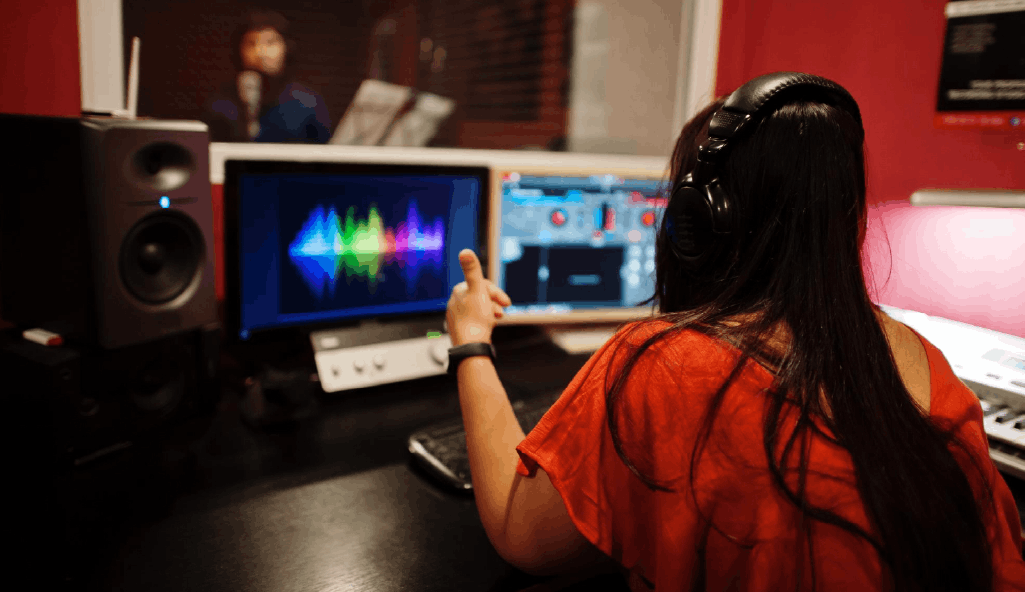
Inside-Complex-Audio-Localization-Challenges-Outside-the-Booth-Portada
18/03/2026

Inside Complex Audio Localization: Challenges Outside the Booth

Audio localization rarely becomes complex all at once. The shift usually happens quietly, as projects expand across languages, regions, and teams. What once felt like a linear process starts to resemble an ecosystem, where creative, linguistic, technical, and logistical decisions influence one another in real time. 

At that stage, audio work moves away from recording isolated lines and becomes an exercise in orchestration. Strategy, coordination, and anticipation start to matter as much as performance and sound quality. This is where roles that combine operational insight with a global view, like Isabel Molina’s, our director of audio localization, become essential to keeping projects on track. 

Below are some of the challenges that tend to emerge outside the booth as an audio project scales, and why they are manageable with the right framework in place. 

Why Audio Localization Gets Harder as You Scale 

Scaling audio localization means working across multiple languages, studios, and time zones, often under shared release schedules. Each added layer introduces variability, and the challenge shifts from execution to alignment. 

Instead of asking whether a single recording sounds right, teams begin asking bigger questions: 

  • Does every language version connect to the world in the same way? 
  • Do performances feel consistent across regions? 
  • Are workflows moving in sync, or drifting apart? 

This is where experience in both planning and execution helps teams stay ahead of issues rather than reacting to them. 

Challenge 1: Consistency across Languages and Regions 

Every language has its own rhythm, casting traditions, and cultural expectations. That diversity is a strength, but it also makes consistency harder to achieve. 

The goal is not uniformity, but coherence. Characters, tone, and brand voice need to feel like they belong to the same universe, even when expressed differently. As Isabel often points out, “each language brings its own nuances, and the challenge is making them feel part of the same whole.” 

This applies across industries. A game character, a patient facing message, a training narrator, or a public service announcement should feel familiar and aligned, regardless of the language being heard. 

Challenge 2: Tight Timelines and Parallel Workflows 

As projects grow, timelines tend to shrink. Releases are often planned simultaneously across markets, and audio work is frequently pushed toward the later stages of production. 

This creates pressure when script updates, approvals, recordings, and quality checks happen in parallel. Without strong planning, small delays can ripple across the entire chain. Isabel frequently highlights that deadlines are becoming tighter, and that internal communication is what keeps parallel workflows from colliding. 

When planning is solid, teams can absorb changes without sacrificing quality. When it is not, even small adjustments become disruptive. 

Challenge 3: Multi-Studio, Multi-Team Coordination 

Scaling audio localization typically means working with a global network of partner studios, actors, and internal teams. This makes scalability possible, but it also increases the need for shared expectations. 

Clear protocols, aligned technical standards, and consistent quality control methodology are what keep output stable, regardless of where recording takes place. Isabel has emphasized that structured workflows allow teams to guarantee consistency even when production is distributed. 

This challenge also appears across many sectors. Therefore, the context changes, but the coordination demands remain similar. 

Challenge 4: Preparing the Ground through Pre-production 

Many audio issues originate long before recording begins. Incomplete materials, unclear terminology, or missing context can lead to mispronunciations, re-records, and avoidable delays. 

Pre-production is often invisible from the outside, but it sets the tone for everything that follows. Technical specification analysis, glossary preparation, session planning, and actor briefing all contribute to smoother execution. Isabel often stresses that strong preparation reduces friction later, whether the content involves pharmaceutical terminology, fictional lore, institutional titles, or internal training language. 

When this groundwork is done carefully, recording sessions become more focused and productive. 

Challenge 5: Keeping Information Flowing along the Chain 

Audio localization relies on a continuous flow of accurate information. Translators, production teams, actors, audio specialists, and clients all depend on timely updates and clear decisions. 

When that chain breaks, errors surface. Lines get recorded with outdated context, approvals lag behind production, or corrections arrive too late to implement smoothly. Isabel has noted that information gaps affect both timelines and quality, even when teams are highly skilled. 

Recognizing information flow as a challenge in itself helps teams design communication structures that support the work rather than slow it down. 

Conclusion 

The challenges behind complex audio localization are real, but they are not chaotic when addressed with the right approach. Strong leadership, clear workflows, and shared standards allow teams to navigate scale with confidence. 

By anticipating risks, proposing continuous improvements, and aligning people across regions, audio localization becomes a strategic discipline rather than a reactive task. And when treated as such, it supports consistency, quality, and trust, even as projects grow in scope and ambition. 

All in all, audio localization deserves early planning and thoughtful investment, because the work behind the booth shapes how audiences experience content long after the recording light turns off. 

Innovation-with-Purpose-Three-Pillars-to-Guide-How-to-Innovate-Portada
11/03/2026

Innovation with Purpose: Three Pillars to Guide How to Innovate

Image of Belén Agulló García, Executive Consultant of Innovation of Terra.

Innovation is often accompanied by noise. New tools, new acronyms, and new, bold promises for efficiency appear almost daily, especially when it comes to AI and automation. For many teams, the challenge is not a lack of ideas; it’s the decision on where to focus without losing sight of people, quality, and long-term impact.

At Terra, innovation is approached through a simple framework inspired by executive consultant of innovation Belén Agulló García’s “Innovation with Purpose” vision. It rests on three pillars that allow us to turn curiosity into meaningful change, without chasing technology for its own sake. 

Pillar 1: Start with the “Why” Before Choosing Any Tool 

One of the most common traps in innovation is beginning with a solution instead of a problem. Teams hear about a platform, a model, or a workflow that worked elsewhere, and they rush to replicate it. Often, their haste results in scattered pilots, muddy outcomes, and human fatigue rather than progress.

A purpose-driven approach, on the other hand, begins with key questions including:

  • What issue are we trying to solve?
  • Who will benefit from this change?
  • How will it improve quality, access, or collaboration?

These questions apply across sectors: healthcare teams may aim to reduce turnaround time for patient-facing information; gaming companies might focus on improving the consistency of player support materials; and education initiatives often seek to make learning content easier to access across languages. When the purpose is clear, technology becomes a means, instead of the driver

Pillar 2: Put People at the Center of Every Innovation 

At Terra, we approach innovation for clients in a way that considers everyone involved in the process. Linguists, reviewers, project managers, engineers, and the communities who interact with the final content all shape what success looks like.

This perspective changes innovation decisions in subtle but important ways. A workflow that saves time but increases the cognitive load for linguists, for example, may not be an improvement. Similarly, a tool that looks powerful but in effect complicates collaboration for clients may slow projects down rather than speed them up.

As Belén often emphasizes, “Innovation should respect the work people already do well.” Building on that idea, linguists can be seen as guardians of language who bring expertise to the table that technology alone cannot replace. When innovation supports linguists’ work instead of sidelining it, quality and trust in the innovation process tend to follow. 

Pillar 3: Measure the Impact, Not Just the Effort 

Trying something new always involves effort, but effort alone is not a measure of success. Innovation with purpose requires defining what success means before a tool or workflow is rolled out.

Depending on the context, impact might be reflected in improved quality, fewer errors, faster turnaround times, better client satisfaction, stronger team well-being, or wider access to information. Without these indicators, it becomes hard to tell whether an initiative should be scaled, adjusted, or paused.

This pillar also helps teams resist adopting technology simply because it is fashionable. Clear metrics create space for learning, not just deployment, and allow innovation to evolve rather than accumulate.

How the Three Pillars Work Together in Practice 

In real projects, these pillars are closely connected. An initiative typically begins by clarifying the “why”. Teams then involve the right people to understand needs and constraints. Then, a solution is selected and piloted with intention, not urgency. Finally, results are reviewed against predefined indicators.

This approach works across industries, since the sequence remains the same whether the context is gaming, healthcare, education, or the public sector. Purpose guides decisions, people shape implementation, and impact determines what comes next.

Conclusion 

The three pillars to purposeful innovation are simple by design: start with why, put people at the center, and measure impact. Together, they offer a practical way to navigate innovation without losing focus on what matters. Whether evaluating AI, exploring new collaboration tools, or rethinking internal processes, this lens can help teams move forward into new territory with confidence.

How-to-Choose-the-Right-Localization-Partner-for-Healthcare-Software-Portada
03/03/2026

Choosing the Right Localization Partner for Healthcare Software

Localizing healthcare software requires a thoughtful approach that balances linguistic precision with technical expertise. From clinical platforms to patient-facing apps, your localization provider plays a critical role in ensuring that every translation is accurate, secure, and aligned with your product. 

The right partner should offer proven industry experience, robust compliance practices, ISO certifications, and a communication style that fits your team. If you’re planning a localization project, here are six essential considerations for choosing a provider equipped to support your software at every stage. 

1. Proven Experience in Healthcare Localization 

Healthcare localization requires a deep understanding of medical language and the sensitivity to effectively adapt patient-facing content clearly and accurately. Choose a provider with solid experience in healthcare translations. A partner familiar with medical terminology, regulatory standards, and audience-appropriate tone will be better equipped to support patients, clinicians, and care teams across platforms. 

2. ISO Certifications That Reflect Quality and Security 

Industry standards are a strong indicator of a provider’s commitment to quality, security, and consistency. When evaluating a language service provider, look for certifications such as ISO 9001 for quality management, ISO 17100 for translation standards, ISO 27001 for information security, and ISO 18587 for post-editing of machine translation. It’s good practice to ask which certifications a vendor holds, as these reflect a proactive approach to reducing risk and maintaining high-quality results across all projects. 

3. HIPAA Compliance and Secure Data Practices 

Your localization partner will likely handle files containing ePHI (electronic protected health information). That’s why it’s essential for them to follow HIPAA-compliant workflows and be able to demonstrate a clear understanding of the security and privacy measures required in healthcare. Ask whether their teams undergo HIPAA training and how they handle access control, secure file sharing, and patient data protection. The right partner will have clear policies in place to reduce the risk of breaches and keep your data safe. 

4. Technical Expertise in Software Localization 

Healthcare software localization requires navigating complex file types like HTML, JSON, and XML, and adapting them without breaking functionality. A skilled localization provider will have the technical know-how to work with these formats and use the right tools to ensure clean integration. They should also be able to recommend translation tools that fit your workflow and technical needs. Look for a team that stays current with evolving technologies and can adapt quickly when systems or content change.  

5. Communication That Matches Your Culture 

Localization projects bring together multiple specialists across different phases, including translators, project managers, developers, and reviewers. That’s why it’s essential to work with a partner who not only manages these workflows but also communicates in a way that aligns with your internal culture and values. Ask how they handle feedback loops and what communication channels they use. A partner whose communication style aligns with yours will be easier to collaborate with. When they also share your expectations for responsiveness and adaptability, it becomes much easier to avoid delays, resolve issues efficiently, and maintain quality across every stage of the process.  

6. Ongoing Support and Scalability 

Localization is rarely a one-time project. Software platforms evolve continuously with updates, new features, and regulatory changes. Your provider should be equipped to support long-term localization needs. Ask whether they have experience managing extended or continuous projects, and how they streamline future workflows. A partner who understands your product structure and terminology from the start can help ensure consistency, reduce rework, and scale your localization efforts efficiently over time. 

Conclusion 

Whether you’re localizing a patient portal or expanding into new markets, the right localization partner will make the process smoother, safer, and more effective. By choosing a provider with proven healthcare experience, strong communication practices, and long-term support, you’ll be better equipped to deliver software that’s trusted by patients, care teams, and healthcare providers alike. 

The-Audio-Localization-Workflow-Creativity-Language-and-Precision-Portada
24/02/2026

The Audio Localization Workflow: Creativity, Language, and Precision

When people hear the term “audio localization,” they often envision a simple content adaptation procedure: translate the script, engage new vocal performers to record it, and move on. In reality, however, audio localization is a far more nuanced process that operates at the intersection of language, creativity, and technology, and it plays a crucial role in how users experience a product.

Localization, in a broad sense, consists of adapting content so it lands naturally with a specific audience. That content can include written text, user interfaces, visuals, and sound. Audio localization specifically focuses on everything the audience hears and includes voice-over, dialogue, narration, and sometimes even vocal reactions or system prompts. It requires linguistic accuracy, creative interpretation, and strict technical precision, all working in tandem to deliver a genuinely immersive outcome.

This overview examines how audio localization actually functions, and why each stage of the process matters to the final experience. 

Key Steps of an Audio Localization Project 

Quality audio localization follows a structured workflow made up of interconnected stages. Each phase builds upon the previous one, and shapes both creative and technical decisions along the way. Understanding this sequence helps teams plan timelines, manage budgets, and anticipate key decision points before production begins.

While projects vary by scope and medium, there are core stages that form the backbone of most audio localization workflows. The process typically moves through script adaptation, performance direction, sound post-production, and technical validation.

1. Cultural Adaptation of the Script 

Audio localization starts with the adaptation of an original script, but the goal for the adaptation is not a word-for-word translation. Rather, the aim is to adapt it so the dialogue sounds natural, credible, and appropriate in the target language.

This means adjusting idioms, humor, tone, and references that may not translate across cultures. Social norms and sensitive topics also require careful consideration, especially when content targets broad or international audiences. At the same time, audio localization must often be executed within certain parameters. For example, lines of dialogue may need to fit within time-coded slots, match lip movements, or respect strict character limits.

The result is a script that delivers the same intent as the original, while sounding like it was written for the local audience from the very start.

2. Artistic Direction and Casting 

Once the translated script is ready, the focus shifts to performance: the creative core of audio localization.

Casting involves selecting voice talent whose age, vocal quality, acting range, and delivery align with the character or brand. The goal is not imitation, but authenticity. A localized voice should feel believable within its cultural context while preserving the character’s original personality and emotional intent.

Directors play a central role at this stage and throughout the project. Their deep knowledge of the original production informs casting decisions and helps deliver a localized performance that is both cohesive and purposeful.

3. Production and Recording 

After casting and preparation, the project moves into the recording stage, which typically requires a great deal of planning, coordination, and real-time decision-making.

Recording sessions may take place on-site or remotely, depending on the project’s scope and geographic spread. In either case, coordination is key. Directors, engineers, and production teams collaborate closely to ensure that performances follow the adapted script, respect timing constraints, and remain consistent across sessions and languages.

Remote recording has become increasingly common, as it allows teams to work with talent and studios around the world. The approach offers flexibility, but it also requires clear communication, shared technical standards, and reliable monitoring to maintain quality.

Whether sessions are live or remote, careful supervision ensures that performances stay aligned with creative direction and technical requirements before moving into post-production. 

4. Post-Production and Mix 

After recording, the raw audio moves into post-production. This stage shapes how the localized voices actually sound in context.

Editors select the best takes, clean up background noise, and apply processing to ensure clarity and balance. Mixing then integrates the voices with music and sound effects, matching levels and tone, so the audio feels cohesive rather than patched together.

Careful post-production prevents distractions such as uneven volume, audible artifacts, or mismatched sound quality. When done well, post-production supports immersion and helps the localized version feel polished and intentional.

5. Technical Specifications and Quality Control 

Every audio localization project must meet specific technical requirements, which can include sample rate, bit depth, loudness standards, channel configuration, file formats, and naming conventions. While the details vary by platform or engine, meeting these specifications is essential for smooth integration.

Quality control is a structured step that verifies both creative and technical consistency. Teams check for missing or duplicated lines, sync issues, audio glitches, and overall compliance with delivery requirements. This stage helps prevent costly rework later and ensures that files behave as expected once implemented.

Conclusion 

Audio localization is not a process that can be executed with shortcuts, as it involves so much more than recording translated lines. It is a collaborative workflow that brings together linguists, directors, engineers, and quality specialists, each contributing to how audiences perceive and trust the content.

From script adaptation to final delivery, every stage shapes the listener’s experience. Planning for audio localization early, involving the appropriate specialized teams, and treating the process as a strategic part of production allows organizations to create audio that feels natural, reliable, and engaging across markets.

Innovation-Consultancy-Turning-Ideas-into-Meaningful-Change-Portada
17/02/2026

Innovation Consultancy: Turning Ideas into Meaningful Change 

“Innovation” is often treated as a buzzword; one that’s associated with big ideas, fast growth, or disruptive technology. In practice, though, innovation is a quiet process that’s carried out with great deliberation. It lives in everyday decisions; in how teams solve problems; in how we test new approaches and adapt to constant change. And it’s in this quieter space of brainstorming and adaptation where innovation consultancy can support organizations in turning ideas into action.

Innovation consultancy helps teams question existing processes, explore alternatives, and design solutions that are both creative and practical. Rather than offering ready-made answers, innovation consultants work alongside teams to guide thinking, structure experimentation, and ensure that work is intentional, and progress is sustainable.

What Innovation Consultants Do, Day by Day 

Innovation consultants work at the intersection of strategy, creativity, and execution. Their role goes far beyond brainstorming sessions or future-facing concepts; in fact, much of their work is grounded in everyday operations, where incremental changes can have a lasting impact.

This often means they’re analyzing workflows, identifying friction points, and helping teams decide what is truly worth changing. Innovation consultancy also involves facilitating collaboration across departments, aligning technology with human needs, and creating space for experimentation without unnecessary risk. Rather than pushing ideas forward too quickly, consultants help teams test, refine, and learn from these efforts before making any broad-scale changes.

In fast-changing environments, innovation consultants act as steady reference points. They support teams by navigating uncertainty, managing competing priorities, and maintaining clarity when timelines or expectations tighten. By encouraging reflection and continuous learning, they help organizations build innovation into how work gets done, rather than treating it as a separate initiative. 

Terra’s Executive Consultant of Innovation: Belén Agulló García 

Image of Belén Agulló García, Executive Consultant of Innovation of Terra.

At Terra, innovation consultancy takes shape under the direction of Belén Agulló García, executive consultant of innovation. Her role requires expertise in several areas including strategy, language, and real operational practice as her teams turn ideas into concrete, workable initiatives that hold up in day-to-day contexts.

Belén brings a strong academic foundation to her work. She holds a degree in Translation and Interpreting, a master’s degree in Audiovisual Translation, and a PhD in Translation and Intercultural Studies. Her broad academic background informs her understanding of how language, technology, and culture intersect—and interact—particularly in complex, multilingual environments.

On her professional path, Belén has spent more than fifteen years in the video game localization industry in roles such as project manager, translation director, and quality and innovation lead. This hands-on experience allows her to approach innovation from within existing workflows, with a clear view of any constraints, risks, and opportunities for meaningful change that may be at play.

In practical terms, her work includes:

  • Assessing processes and workflows to identify where change can add real value
  • Supporting teams as they explore new approaches, tools, or ways of working
  • Helping align innovation initiatives with business goals and human needs
  • Facilitating collaboration across departments that do not always work closely together
  • Evaluating how to introduce emerging technologies responsibly and sustainably

Training is another key dimension of her profile. For several years, Belén has taught video game localization and subtitling technologies in advanced degree programs and professional workshops in Spain, the United Kingdom, and France. This close connection to education keeps her perspective grounded in current practice and emerging needs.

Belén’s role is rooted in listening, asking the right questions, and creating conditions for teams to shape solutions that fit their particular context and needs. By staying close to daily operations, she helps ensure innovation remains relevant, practical, and achievable.

Innovation with Purpose 

A key principle behind Terra’s approach to innovation is the idea of purpose. We don’t innovate simply to keep pace with trends or to adopt tools just because they’re new. Rather, we guide our innovative work with intention and an enormous sense of responsibility.

As Belén explains, “Every time we want to innovate or introduce new technology, I like to start by asking why. Because we don’t do things just for the sake of it, but to move forward in a more meaningful, effective way.”

Innovation with purpose means considering the impact of change on people, teams, and the broader ecosystem. It involves asking whether a new approach improves clarity, inclusivity, or long-term resilience. It also means recognizing that technology should support human expertise, not overshadow it.

This mindset shapes how Terra approaches experimentation and growth. We evaluate innovation not only through efficiency gains, but also through its ability to strengthen collaboration, trust, and meaningful outcomes. Belén’s work reflects this balance, keeping the human perspective at the center of every innovation effort.

Conclusion 

Innovation consultancy plays an essential role in helping organizations navigate complexity with clarity and intention. By combining strategic insight with practical, everyday support, innovation becomes a continuous, integrated practice, rather than a fractured, one-time effort.

Through her role as executive consultant of innovation, Belén helps Terra approach change thoughtfully, and she supports our teams and clients with equal care as they adapt, experiment, and grow. Ultimately, Terra’s approach reflects a simple truth that Belén sees in her work every day: meaningful innovation happens when ideas, people, and purpose move forward in the same direction.

The-Teams-and-Systems-Behind-Modern-Localization-QA-Portada
10/02/2026

The Teams and Systems Behind Modern LQA

The quality assurance (QA) component of the localization process is often perceived as a final checkpoint: the moment when near-complete content is reviewed right before delivery. In reality, however, for LQA to be truly effective, collaborative review protocols need to be implemented early on and sustained throughout the lifecycle of a project. Actual quality emerges from the combined contributions of people, workflows, and systems, which all must evolve alongside changing technology and increasing content demands to produce a top-quality result.

As automation and AI-assisted tools become part of everyday localization pipelines, quality assurance, too, is being delivered in ever-expanding ways. That’s not because QA technology can replace human expertise, but rather, because it can help to reshape how quality is managed, monitored, and maintained at scale. In this context, QA functions as a service that connects disciplines, and not just a last-minute, isolated task that’s performed at a project’s conclusion.

Quality as a Continuous Service 

Modern localization projects rarely follow a predictable, linear path. Challenges can include content updates arriving late; languages being added midstream, and delivery schedules tightening. In this environment, the quality of the localization can’t be determined by isolated checks or a sole manual effort.

Instead, QA can be carried out successfully by operating as a continuous service that accompanies content across stages and iterations. Automated checks help surface problematic patterns, enforce baseline consistency, and reduce repetitive tasks. Human expertise, meanwhile, focuses on interpretation, clarity, and contextual accuracy. Together, they form a framework that supports both speed and reliability.

This paired approach allows teams to respond to changes in a project’s scope or timeline while maintaining coherence across languages and platforms.

Quality Management as a Shared Responsibility 

Quality assurance is sustained through the collaboration of multiple roles that each contributes to a different perspective.

  • Reviewers and proofreaders often act as the first structured point of QA contact, as they ensure that content reads naturally, communicates clearly, and aligns with its intended audience. Their work helps stabilize much of a project’s content quality early on, before issues travel downstream. 
  • Multilingual Quality Assurance Managers (QAMs) take a broader view. People in these roles oversee how quality standards are applied across languages, track recurring patterns, and translate feedback into process improvements. QAMs bridge linguistic expertise, operational needs, and tool-supported insights.

Together, these roles form a quality management layer that balances detail-oriented reviews with strategic oversight. Automation, meanwhile, supports this work by providing visibility and structure, but decisions remain grounded in professional human judgment and experience.

Alignment Across Roles and Workflows 

Quality thrives on coordination. Reviewers, proofreaders, QAMs, and project managers, as well as technical and operational teams, all contribute to the caliber of a project’s outcome. Along the way, clear workflows, shared standards, and consistent communication allow quality to remain stable even as projects may increase in scope and complexity.

Technology plays a supporting role in these scenarios. Centralized platforms, reporting tools, and automated checks reduce friction and help teams stay aligned while they collaborate to resolve ambiguities, adapt guidelines, and respond to real-world constraints.

When alignment is strong, quality reviewing becomes predictable and sustainable rather than reactive. 

Technology as an Enabler of Scalable Quality 

Automation has become a helpful part of modern QA workflows. Tasks such as terminology validation, formatting checks, and consistency scans can now be performed faster and more reliably through automated systems, and these tools also introduce stronger structure and traceability features, especially when applied to large-scale projects.

The value of automation lies in what it enables. By handling repetitive or mechanical checks, automation frees teams to focus on QA at a distinctly human level, including the evaluation of content for its meaning, tone, and user experience. In other words, automation supports prioritization and transparency without removing human accountability.

When employed thoughtfully, technology strengthens quality assurance by making it more manageable and resilient in fast-moving environments.

Why Quality Matters More in a Tech-Driven Era 

As localization workflows accelerate, quality assurance acts as a stabilizing force. It ensures that efficiency does not compromise clarity, client and user trust, or usability. In a world where localized content reaches global audiences instantly, delivering consistency and reliability carries long-term value.

Quality assurance is less about perfection than confidence: that content is communicating what it should, in the way it should, across languages and contexts.

Conclusion 

Modern localization QA is a collective effort shaped by people, processes, and technology. Reviewers, proofreaders, and QAMs contribute different layers of oversight, while automated tools support scale and consistency. Together, they form a quality assurance ecosystem that adapts to change while maintaining its direction.

When viewed through this lens, quality assurance becomes a strategic service throughout the life of a project, rather than a final safeguard. It’s a service that supports growth, reinforces trust, and ensures that localization delivers meaningful results in an increasingly technology-enabled world.

Protecting-ePHI-in-Healthcare-The-Role-of-a-HIPAA-Security-Officer-portada
03/02/2026

Protecting ePHI in Healthcare: The Role of a HIPAA Security Officer

In the healthcare industry, safeguarding electronic protected health information (ePHI) requires organizations to be on top of security protocols and continuous risk assessments. As cloud-based workflows become standard, medical entities and their language partners must ensure that sensitive patient data remains secure at every touchpoint.   

What a HIPAA Security Officer Does 

Claudio Oulego works as a HIPAA security officer at Terra to oversee the security framework that protects every piece of electronic protected health information handled by the organization. 

As he explains, this requires a combination of technical expertise, regulatory awareness, and ongoing risk evaluation to keep sensitive data safe while supporting daily operations. 

Image of Claudio Oulego, HIPAA Security Officer at Terra.

Key Responsibilities of a HIPAA Security Officer 

Establishing, managing, and enforcing security protocols that safeguard information security systems involves: 

  • Maintaining HIPAA compliance mechanisms to ensure the integrity of healthcare information, including documentation and audits. 
  • Defining and implementing technical and administrative controls, such as access management, encryption, and secure configurations. 
  • Conducting continuous risk assessments that could affect the security of health information. 
  • Identifying possible security incidents and implementing measures to prevent those events. 

Staying Current in the Security Landscape 

Claudio works with compliance management platforms that help monitor controls, document policies, and support audit readiness. These tools complement his technical background by providing structured oversight, allowing him to identify potential risks early and adapt security measures as needed. They also support consistency across teams, helping security requirements stay aligned with daily operations. 

Beyond these day-to-day responsibilities, his role requires constant vigilance. Healthcare security and privacy regulations continue to evolve, as do the technologies and threats surrounding them. Claudio keeps ahead of the curve in a number of ways. “I’m always learning through specialized training and industry forums focused on cybersecurity, compliance, and emerging technologies,” he says. “For me, staying informed also means maintaining close contact with compliance and security partners, monitoring official sources, and following technical bulletins to anticipate regulatory changes or emerging risks before they become issues.”

Protecting ePHI Means Protecting Patients 

When people think about information security, they often picture systems, software, and infrastructure. But for Claudio, the most critical element is human. Many security incidents can begin with common, everyday errors: a reused password, a rushed click on a phishing email, or a device connected to an unsecured network. That’s why Claudio places so much emphasis on team training and awareness.

For him, helping people understand not just what the rules are, but why they exist and who they’re ultimately meant to protect, is the most important element of his work. Behind every translation is a person who has trusted the healthcare system with their most sensitive information. When teams see security as a way to safeguard patients, it becomes part of a culture of care. 

Conclusion 

Protecting ePHI is an ongoing responsibility that blends technology, policy, and people. A strong HIPAA security officer role helps ensure patient data remains secure throughout translation workflows, supporting compliance, reducing risk, and reinforcing a culture where privacy and care go hand in hand.