
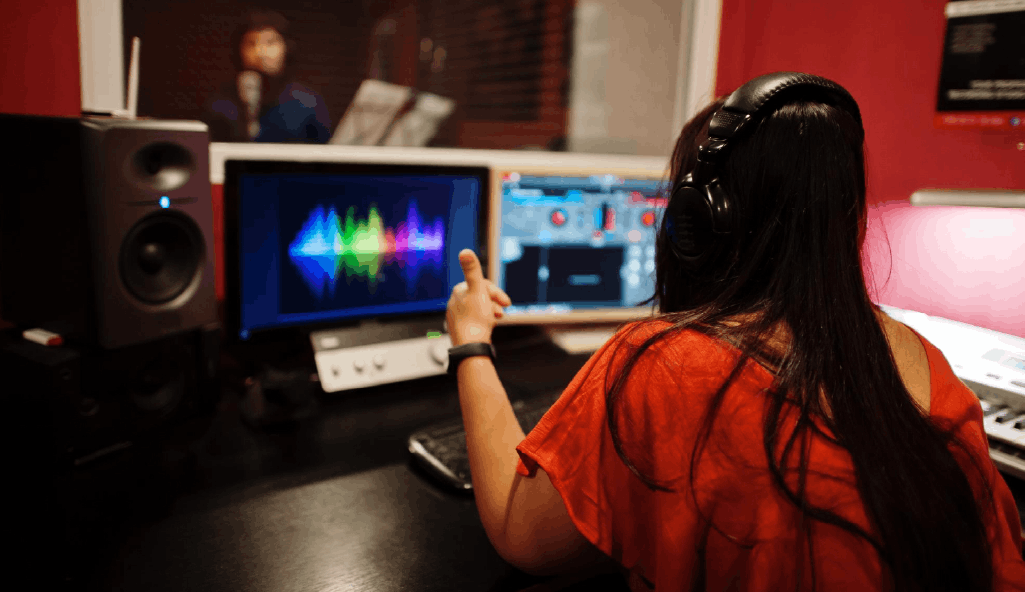
Audio localization rarely becomes complex all at once. The shift usually happens quietly, as projects expand across languages, regions, and teams. What once felt like a linear process starts to resemble an ecosystem, where creative, linguistic, technical, and logistical decisions influence one another in real time.
At that stage, audio work moves away from recording isolated lines and becomes an exercise in orchestration. Strategy, coordination, and anticipation start to matter as much as performance and sound quality. This is where roles that combine operational insight with a global view, like Isabel Molina’s, our director of audio localization, become essential to keeping projects on track.
Below are some of the challenges that tend to emerge outside the booth as an audio project scales, and why they are manageable with the right framework in place.
Why Audio Localization Gets Harder as You Scale
Scaling audio localization means working across multiple languages, studios, and time zones, often under shared release schedules. Each added layer introduces variability, and the challenge shifts from execution to alignment.

Instead of asking whether a single recording sounds right, teams begin asking bigger questions:
- Does every language version connect to the world in the same way?
- Do performances feel consistent across regions?
- Are workflows moving in sync, or drifting apart?
This is where experience in both planning and execution helps teams stay ahead of issues rather than reacting to them.
Challenge 1: Consistency across Languages and Regions
Every language has its own rhythm, casting traditions, and cultural expectations. That diversity is a strength, but it also makes consistency harder to achieve.
The goal is not uniformity, but coherence. Characters, tone, and brand voice need to feel like they belong to the same universe, even when expressed differently. As Isabel often points out, “each language brings its own nuances, and the challenge is making them feel part of the same whole.”
This applies across industries. A game character, a patient facing message, a training narrator, or a public service announcement should feel familiar and aligned, regardless of the language being heard.
Challenge 2: Tight Timelines and Parallel Workflows

As projects grow, timelines tend to shrink. Releases are often planned simultaneously across markets, and audio work is frequently pushed toward the later stages of production.
This creates pressure when script updates, approvals, recordings, and quality checks happen in parallel. Without strong planning, small delays can ripple across the entire chain. Isabel frequently highlights that deadlines are becoming tighter, and that internal communication is what keeps parallel workflows from colliding.
When planning is solid, teams can absorb changes without sacrificing quality. When it is not, even small adjustments become disruptive.
Challenge 3: Multi-Studio, Multi-Team Coordination

Scaling audio localization typically means working with a global network of partner studios, actors, and internal teams. This makes scalability possible, but it also increases the need for shared expectations.
Clear protocols, aligned technical standards, and consistent quality control methodology are what keep output stable, regardless of where recording takes place. Isabel has emphasized that structured workflows allow teams to guarantee consistency even when production is distributed.
This challenge also appears across many sectors. Therefore, the context changes, but the coordination demands remain similar.
Challenge 4: Preparing the Ground through Pre-production

Many audio issues originate long before recording begins. Incomplete materials, unclear terminology, or missing context can lead to mispronunciations, re-records, and avoidable delays.
Pre-production is often invisible from the outside, but it sets the tone for everything that follows. Technical specification analysis, glossary preparation, session planning, and actor briefing all contribute to smoother execution. Isabel often stresses that strong preparation reduces friction later, whether the content involves pharmaceutical terminology, fictional lore, institutional titles, or internal training language.
When this groundwork is done carefully, recording sessions become more focused and productive.
Challenge 5: Keeping Information Flowing along the Chain

Audio localization relies on a continuous flow of accurate information. Translators, production teams, actors, audio specialists, and clients all depend on timely updates and clear decisions.
When that chain breaks, errors surface. Lines get recorded with outdated context, approvals lag behind production, or corrections arrive too late to implement smoothly. Isabel has noted that information gaps affect both timelines and quality, even when teams are highly skilled.
Recognizing information flow as a challenge in itself helps teams design communication structures that support the work rather than slow it down.
Conclusion
The challenges behind complex audio localization are real, but they are not chaotic when addressed with the right approach. Strong leadership, clear workflows, and shared standards allow teams to navigate scale with confidence.
By anticipating risks, proposing continuous improvements, and aligning people across regions, audio localization becomes a strategic discipline rather than a reactive task. And when treated as such, it supports consistency, quality, and trust, even as projects grow in scope and ambition.
All in all, audio localization deserves early planning and thoughtful investment, because the work behind the booth shapes how audiences experience content long after the recording light turns off.